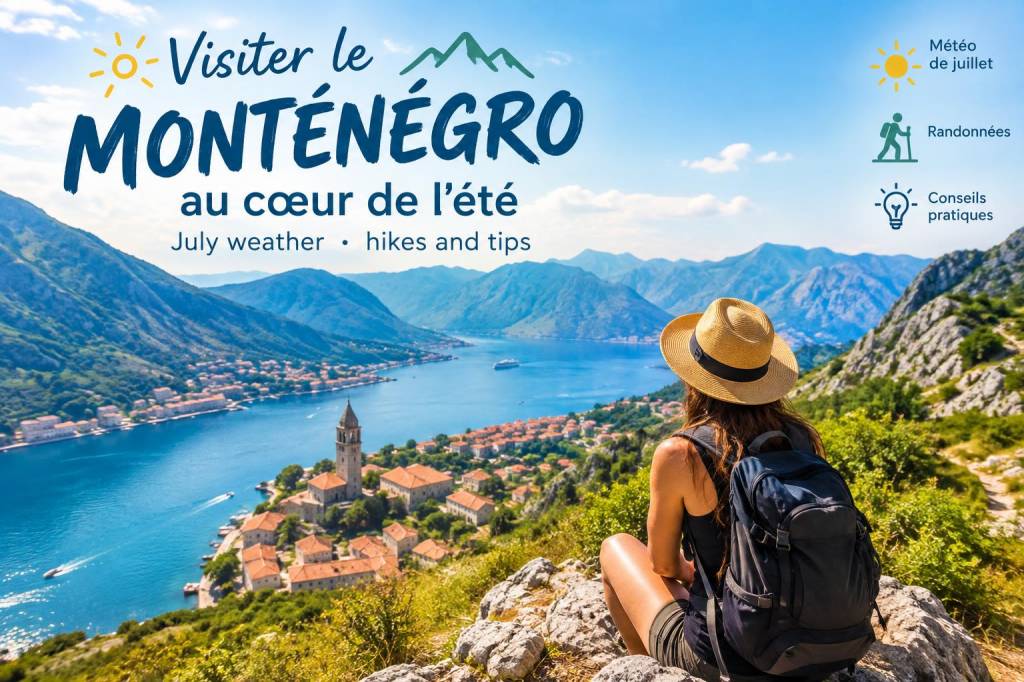
July is the month when I feel Montenegro at full volume: long light, warm stone, bright water, and mountain air that still stays cool enough for a serious climb. When I plan a summer trip, I think less about ticking off sights and more about moving between contrasts: a morning on the coast, an afternoon in the hills, and an evening in a walled old town where the shadows finally feel welcome. If you are visiter le Montenegro au cœur de lété, July is both a gift and a test. It rewards early starts, flexible plans, and a little respect for heat, crowds, and mountain weather shifts.
What I love most is that Montenegro is small enough to make ambitious days possible, yet varied enough to feel like several trips in one. In a single week, I can move from the Bay of Kotor to Durmitor, from a beach breakfast to a ridge trail above alpine lakes, and from a road trip through old stone villages to a seafood dinner by the water. July makes that rhythm vivid, but it also asks for preparation. That is where practical planning matters: the right clothing, water discipline, trail timing, and a realistic sense of distances.
What July feels like on the ground
July is peak summer, so I expect heat on the coast, strong sun inland, and very busy tourist zones. On the Adriatic side, daytime temperatures often sit around 28°C to 34°C, while nights remain warm and humid near the sea. Inland and in the mountains, the air is usually fresher, with daytime values often closer to 20°C to 28°C depending on altitude. That spread is one reason Montenegro works so well for mixed itineraries: I can chase cooler air without leaving the country.
Rain is usually limited in July, but mountain weather can still change quickly. I never treat clear skies as a guarantee on higher trails. A dry morning can turn into a windy, cloudy afternoon, especially in exposed sections of Durmitor or Biogradska Gora. I check forecasts daily and I leave room for route changes.
July conditions I keep in mind:
- Strong UV exposure, especially between late morning and mid-afternoon
- Busy coastal roads and slower travel times near Kotor, Budva, and Tivat
- Warm sea temperatures that make swimming highly inviting
- Cooler, more comfortable hiking conditions in higher elevations
- Potential afternoon storms in mountain areas, even during a mostly dry month
Where I go for a balanced July itinerary
If I want a trip that feels rich but not rushed, I usually build it around three zones: the coast, a mountain base, and a historic inland stop. The coast gives me water, sunsets, and old towns. The mountains give me movement, shade, and distance from the crowds. The interior adds a slower pace and a sense of scale.
On the coast, Kotor is still the strongest all-round base if I want architecture, short scenic drives, and quick access to boat trips. Budva works better if I want a beach-heavy stay and a more active nightlife scene. Herceg Novi offers a slightly calmer rhythm and makes it easier to move toward the border or the Bay’s quieter corners.
For mountain time, Žabljak is the classic choice because it places me near Durmitor National Park, Black Lake, and several high-altitude routes. If I want a more off-grid feeling, I look toward Plužine or routes around Tara Canyon. Inland, Cetinje is excellent when I want a cultural pause and cooler evenings.
Hikes I would prioritize in July
July is one of the best months for higher-elevation hiking in Montenegro because snow is usually gone from the main summer routes and trails are open in a much more reliable way. I still start early, because morning conditions are better for both temperature and visibility. My ideal hiking day begins before sunrise, with a summit or ridge reached before the strongest heat.
Trails that fit a July trip:
- Bobotov Kuk in Durmitor: one of the country’s most iconic summits, demanding but rewarding
- Crno Jezero loop: a gentler walk near Žabljak, ideal for a first mountain day
- Prutaš: dramatic landscape, open views, and a strong sense of scale
- Lake Skadar viewpoints: less alpine, more Mediterranean, excellent for a slower day
- Lovćen area trails: a good compromise between effort, scenery, and access
On harder routes, I never assume signage alone will be enough. I carry offline maps, enough water for a longer-than-planned outing, and a backup plan if cloud cover reduces visibility. For anyone who hikes regularly, Montenegro in July is deeply satisfying. For anyone who is less experienced, I would rather choose a moderate trail and enjoy the day than push too hard in the heat.
My mountain routine in July:
- Start early, ideally before 8:00 a.m.
- Carry at least 1.5 to 2 liters of water for short hikes, more for longer ones
- Use sunscreen, sunglasses, and a hat with a real brim
- Pack a light shell, even when the forecast looks stable
- Check whether a trail crosses exposed limestone, scree, or narrow ridgelines
Coastal rhythm: what I do when heat rises
When the coast gets hot, I stop trying to “see everything” and switch to a slower pace. I move early, rest during the most intense hours, then return to the streets and waterfront after 5:00 p.m. That is when Kotor’s stone alleys feel more pleasant, Budva’s promenade becomes livelier, and the light turns excellent for photography.
Sea swimming becomes part of the day structure. I like to alternate between walking and water rather than trying to sit in one place for hours. That approach makes July feel manageable, especially in more crowded spots. If I am near the Bay of Kotor, I often pair a morning visit to a viewpoint with a late swim or a boat ride. If I am in Budva, I prefer to reach the beach early and leave the main midday window for lunch or shade.
Food also changes in July. I naturally lean toward grilled fish, salads, yogurt, fruit, and simple dishes that do not weigh me down in the heat. A cold drink after a hot walk can feel like a small miracle, but I pay attention to hydration first. Alcohol and strong sun are not a smart combination on a coastal travel day.
Practical planning numbers I rely on
When I explain Montenegro in July to other travelers, I like to ground it in numbers. These are not rigid rules, but they help set expectations and reduce stress.
| Factor | Typical July range | What I do with it |
|---|---|---|
| Coastal daytime temperature | 28°C to 34°C | Move early, rest midday, plan shaded breaks |
| Mountain daytime temperature | 20°C to 28°C | Choose longer hikes, but still protect against sun |
| Sea temperature | Warm and swimmable | Build swimming into the day |
| Main hiking start time | Before 8:00 a.m. | Avoid peak heat and afternoon weather risk |
| Peak visitor pressure | Midday to early evening | Shift major sightseeing to early or late hours |
Travel times also matter more than they look on a map. In summer, a road that seems short can take longer because of traffic near the coast and slower mountain roads. I leave extra margin for ferries, parking, and scenic stops that I know I will want to make anyway.
Useful sources I trust before I leave
I always cross-check a July trip with a few reliable sources. That habit saves time and helps me stay realistic about trail conditions, weather, and transport.
- Meteo Montenegro for current weather and local forecasts
- National Tourism Organisation of Montenegro for region overviews and seasonal travel notes
- National parks information for park access, rules, and trail updates
- Windy or a similar weather model for mountain wind and storm timing
For any hike, I also look for recent trip reports from other hikers, because a trail that was fine last week may have erosion, heat exposure, or maintenance issues now. That is especially true on exposed routes where conditions can change quickly in summer.
What I pack for July in Montenegro
I keep my packing list simple, but I never cut corners on sun and water protection. A July trip here feels better when I travel light, yet I would never leave behind items that make heat manageable.
My essential July packing list:
- Breathable shirts and shorts or hiking trousers
- Light layers for mountain evenings
- Sturdy shoes with grip for rocky trails
- Swimwear and a quick-dry towel
- Water bottle or hydration reservoir
- Sunscreen, lip balm, sunglasses, and hat
- Offline maps and a power bank
- Small first-aid kit with blister care
I also like a compact rain shell. Even in dry season, it earns its place in the bag. In the mountains, it can block wind as much as rain, which makes it more useful than it first appears.
Who July suits most, and where it can feel demanding
July suits travelers who enjoy long daylight, swimming, hiking, and a lively atmosphere. It is excellent for people who can start early, pace themselves, and accept that the most famous places will be busy. If I want a social summer trip with a good balance of coast and mountains, July works very well.
It can feel demanding for travelers who dislike heat, prefer empty viewpoints, or want very spontaneous movement without booking ahead. In the most popular areas, accommodation and parking can be tight. I would never arrive in July expecting the same calm I might find in shoulder season.
Still, that is part of the appeal. Montenegro in July feels alive in a way that is hard to ignore. The country is compact enough to explore efficiently, yet dramatic enough to keep surprising me. When I pace the days carefully, start early, and leave space for both sea and summit, I end up with a trip that feels richly layered rather than merely busy.