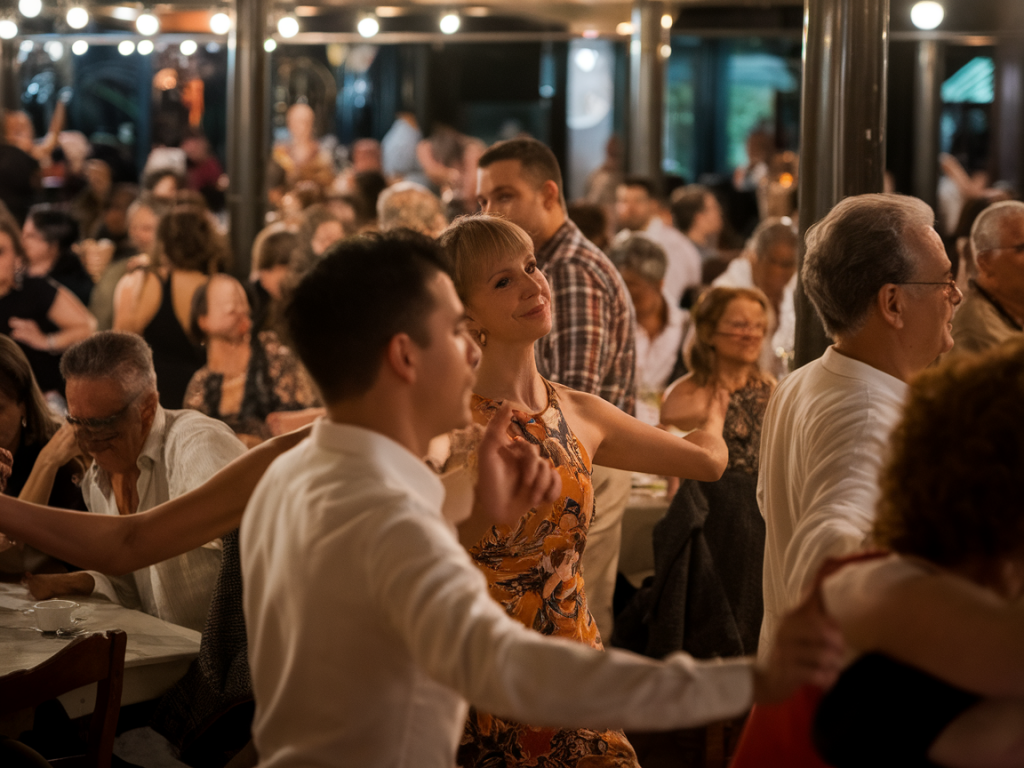
I remember the first time I slipped into a neighborhood milonga in Buenos Aires: a narrow doorway, a hand-painted sign, warm light spilling onto cobblestones and the low hum of voices and bandoneón. It felt like entering a living room where everyone already knew the choreography of kindness. As a photographer and a curious traveler, I wanted to capture that intimacy — the tilt of a head, a foot tucked under a dress, the way a pair of dancers took up the line of dance and made time fold. But I also knew that tango is not a show for outsiders. It is a culture with rules, codes and a tender sense of privacy. Over several stays in the city I learned how to join a milonga and photograph dancers as a respectful outsider, and I’ll share the places, the etiquette, and the camera tips that helped me make honest, considerate images.
Where to go: neighborhood milongas that welcome visitors
For a more intimate and authentic milonga experience, skip the big tourist shows and head to neighborhood halls in Almagro, San Telmo, Villa Crespo and Boedo. These are the places where locals wind the evening through tandas (sets of songs), embrace tradition and sometimes welcome curious guests who come with humility.
- Almagro — A historic tango neighborhood with many small clubs and cafés that host milongas. Atmosphere: bohemian, cross-generational.
- San Telmo — Cobblestone streets and antique shops; milongas here often attract a mix of locals and travelers seeking a classic vibe.
- Villa Crespo — Less touristy, with smaller, friendly practice nights and community milongas.
- Boedo — Traditional porteño clubs and neighborhood centers where tango is part of the daily rhythm.
- Palermo — Some milongas here lean younger and experimental; good for those who want something a touch more contemporary.
To find current schedules, I check local listings and Facebook groups (search “milonga” + neighborhood), the milonga calendars on community pages, or ask a local tango teacher. Many milongas have irregular hours or special events, so a quick message to the venue’s page or a call the same day has saved me plenty of disappointment.
How to enter and participate — the etiquette every photographer should know
Tango has its own slow code of conduct, and photographers need to adopt it too. These are the rules I follow every time:
- Buy a ticket or a drink — Most milongas have a cover charge. Paying shows respect and gives you the right to be there.
- Observe before shooting — Spend at least one tanda watching from the edge. Learn how dancers move through the line of dance and how the room breathes.
- Ask permission — If you want to make close portraits or follow a couple, ask. A simple “¿Puedo tomarles una foto?” in Spanish or “May I photograph you?” goes a long way. Many dancers will say yes or set conditions (no flash, one photo, etc.).
- No flash — Flash is intrusive and breaks the mood. Use high ISO and fast lenses instead.
- Stay off the pista — Only step onto the dance floor if invited, during a social dance or a learning session. Photograph from the periphery.
- Respect the tanda — Don’t interrupt a tanda to photograph dancers in the middle of it. Shoot during the walk, between tandas, or after the tanda when people are socializing.
- Honor anonymity — If a dancer declines a photo or asks not to be identified, respect that. Avoid publishing close-up faces without consent, especially on social media.
- Be discreet — Use minimal gear, move quietly, and avoid prolonged setups that obstruct others.
How I photograph milongas: gear and technical tips
I shoot milongas with a compact mirrorless camera because it’s small, fast and less intimidating. Here’s what I usually bring and how I set it up:
- Lenses: 35mm or 50mm prime for environmental portraits and the feeling of being in the room; an 85mm if I’m invited to shoot portraits from a respectful distance. These focal lengths keep me embedded in the scene without being intrusive.
- Aperture: f/1.8–2.8 to separate subjects from the background and to let in light without flash.
- Shutter speed: 1/125–1/250s for most dance motion; I’ll raise it to 1/320–1/500s for sharp footwork or faster turns. If I want motion blur for feeling, I’ll drop the shutter speed intentionally while panning.
- ISO: Don’t fear it — I regularly shoot ISO 3200–12800 in dim halls. Modern mirrorless cameras handle noise well and I shoot RAW to recover shadows in post.
- Focus: Continuous AF with a small focus area on the upper body keeps the eyes/head in focus while dancers move.
- No flash: Use available light; if absolutely necessary, a small, diffused on-camera LED at very low power and with permission can be less disruptive than a flash.
- White balance: Street lights and warm tungsten make skin tones orange. I shoot RAW so I can correct warmth later, and I often dial the camera to tungsten to preserve the mood.
Compositional and storytelling tips
It’s not just about freezing a step; it’s about telling the story of the room. These are the things I look for:
- Hands and embrace: The abrazo (embrace) and hands are where tango’s emotion lives. Tight frames on a clasped hand or a shoulder reveal the language of the dance.
- Edges and silhouettes: Shooting against the light of a doorway or a single lamp creates silhouettes that speak to the dance’s mystery.
- Context shots: Capture the bar, the chairs, the couples waiting, the older regulars, the bandoneón player — those frames place a dance in its social habitat.
- Between moments: I find the moments between steps — a shared laugh, a brief rest, a glance across the room — to be the most honest.
How to approach dancers and ask for permission
Approach with humility and a smile. I introduce myself briefly, say where I’m from and that I’m a photographer who loves documenting cultural spaces. Offer to show a photo on the camera immediately after taking it — people often respond to seeing themselves framed with care. If someone prefers not to be photographed, I thank them and move on. When I get permission, I also ask whether they want credit by name or prefer to stay anonymous.
Publishing and sharing images responsibly
When I edit and publish milonga photos on Acidadventure, I follow a few rules:
- Blur faces when consent is unclear — If I have not obtained clear permission to publish identifiable portraits, I either crop/blur faces or publish only contextual images.
- Credit and context: I credit dancers and the milonga when possible, and I include a short note on etiquette so readers understand the ethics behind each frame.
- Ask before commercial use: If an image might be used commercially (e.g., a print or a book), I always obtain written permission or a model release.
Milongas are communal: you’re invited into a practice that’s shared, repeated and cherished. Photographing there is an act of witnessing, not taking. If you come with curiosity, pay your dues, ask politely and let the room guide you, you’ll leave not only with images but with a handful of conversations, a few taught steps and the quiet knowledge that you honored the people you photographed. Those are the moments that make urban travel feel less like sightseeing and more like being gently welcomed into someone else’s living room.