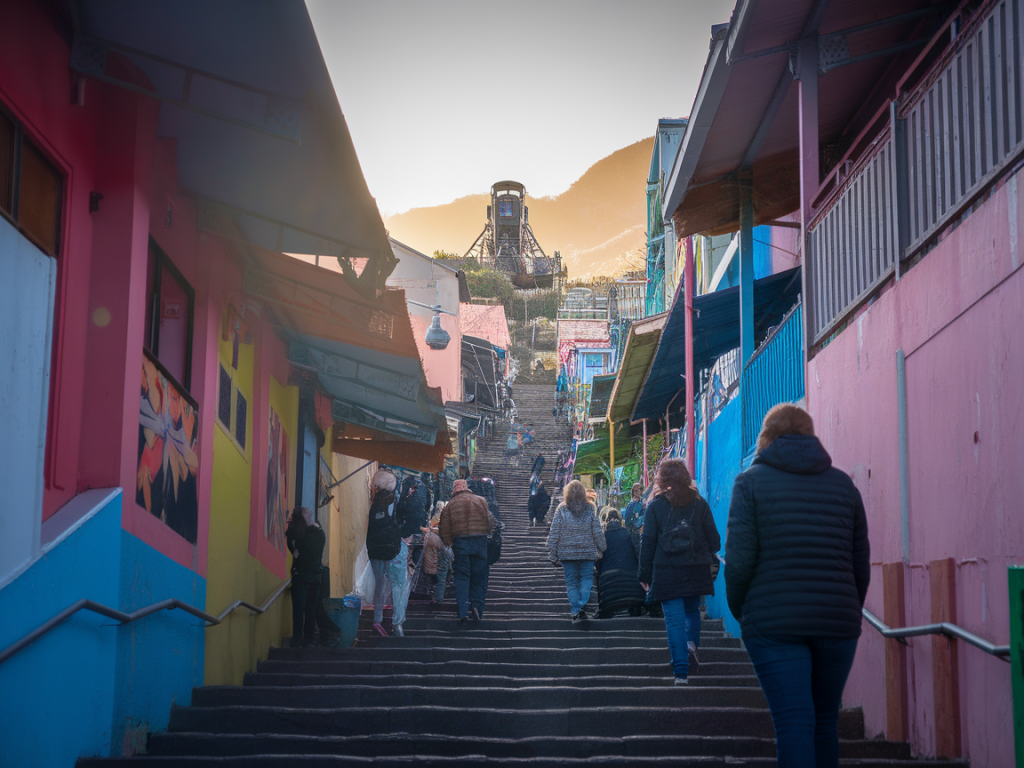
I wait for dawn on a narrow lane that slopes toward the port, the air tasting of salt and roasted coffee from a nearby market stall. In Valparaíso the light arrives like a rumor, pooling first on corrugated roofs and then spilling down the hill into the stalls, scales and little faces that make the cerro markets glow. I’ve done this 90-minute walk more times than I can count, learning the heartbeat of these early hours and how to make candid port-side portraits that feel honest rather than intrusive.
Why a 90-minute walk?
Ninety minutes is long enough to capture golden-hour gradients, move between a few markets on foot and build rapport with vendors without overstaying your welcome. It’s short enough to stay focused and observant, which is essential for candid portraiture. The route I describe threads together three market nodes on a single cerro—an ideal window to catch market set-up, the first customers, and intimate moments between workers and the sea.
Where to start and the route I take
I begin at the top of the hill, near a small mirador where the city still breathes quietly. From there I descend toward the main market cluster—look for the places with the most activity: fish stalls, fruit carts and the tiny kitchens that fire up before sunrise. My typical route:
- Mirador above the port: orientation and first wide shots.
- Primary fish market: scales, ice beds and dockside workers.
- Local produce stalls along the alleyways: vendors arranging trays, an elderly woman shelling beans, a boy with a thermos of coffee.
- A tiny food stall by the pier: cooked snacks, laughter, the first customers.
Timing and micro-itinerary
Arrive 15 minutes before official sunrise to pick your vantage and watch how people prepare. The 90-minute slot roughly breaks down like this:
| 0–15 min | Mirador, environmental wide shots, establish light direction. |
| 15–45 min | Primary fish market: candid portraits of workers, hands, scales and ice. |
| 45–70 min | Produce alley: closer portraits, fleeting interactions, children and pets. |
| 70–90 min | Pier stall: last golden-hour portraits and small scene details before the midday crowd. |
Gear I bring (minimal and mobile)
I travel light. A compact setup helps me blend in and move quickly between alleys and staircases.
- Camera: Fujifilm X100-series or Sony a7C—small mirrorless bodies that don’t scream “tourist”.
- Lenses: 35mm or 50mm prime (or the X100’s fixed 23mm/35mm equivalent). Fast apertures (f/1.4–f/2.8) help with low light and subject separation.
- Accessories: a neutral-colored sling bag, extra battery, a micro-sd card, and a small microfiber towel to wipe salt spray off lenses.
- Optional: a discreet small flash with a diffuser for fill in shaded stalls, though I prefer available light.
Settings and approach for candid portraits
Light in Valparaíso moves fast. I typically shoot in aperture-priority, select a wider aperture (f/2–f/4) and keep ISO between 200–800 depending on conditions. Use a shutter speed no slower than 1/125 for single subjects in motion—faster if someone is carrying fish or climbing steps.
- Metering: spot or center-weighted for faces; highlight-priority if the sky is very bright.
- Autofocus: continuous AF for moving subjects; single AF for posed or semi-posed portraits.
- White balance: auto is fine but consider a +5 to +10K warm shift to match golden-hour warmth.
How to get candid, port-side portraits ethically
Candid doesn’t mean disrespectful. My aim is to capture people within their context—hands at the scale, faces rinsed with market light—without creating discomfort.
- Start with proximity: spend a few minutes in the area without taking photos. People relax when they don’t feel observed.
- Use a small camera and keep it down. Lift the camera only when something honest is happening.
- For closer portraits, ask permission. I usually smile, say “buenos días,” and ask “¿puedo sacar una foto?” Most vendors are comfortable, especially if I offer to show them the image.
- Respect refusals. If someone declines, thank them and step away—no pressure.
- For children, always ask a parent or guardian. Kids make great subjects but require extra care and sensitivity.
Compositional tricks I use
Candid portraiture in markets is about context and texture. I look for layers: nets, scales, crates, onion-skin plastic and the sparkle of wet pavements.
- Frame faces with market clutter for a lived-in look—hands on scales, hanging produce or corrugated iron.
- Use reflections—puddles, stainless steel trays or polished fish surfaces—to add depth.
- Seek repetition—rows of fish or baskets—to give rhythm to a portrait.
- Emphasize gestures: a woman tying an apron, an old man counting coins, a vendor’s hands salt-rubbing a fillet.
Sound, scent and conversation: how to build rapport
Photography in markets is multisensory. I let the sounds guide me—the rattle of carts, the shouted prices, the clink of knives. I comment on smells (fresh ceviche, roasted coffee) and use small talk to humanize the exchange. Sharing a translated phrase or complimenting a vendor’s produce often opens doors. If I buy something small—a piece of fruit or an empanada—it becomes a natural bridge to take a portrait.
Practical safety and respect for the place
Valparaíso is wonderfully chaotic but take basic precautions: keep valuables close, use a crossbody bag, and avoid flashing expensive gear in isolated alleys. More importantly, leave the place as you found it: don’t move goods for a better shot, don’t touch animals without permission, and always ask before photographing religious ceremonies or personal rituals.
After the walk: quick workflow
Back at a café I review images on the camera to ensure exposure and focus are good. I flag favorites and write short voice notes about the subject (name, what they were doing, any interesting detail) so the portraits keep their stories. Later, I process gently—lift shadows, preserve skin tones and maintain the market’s color mood. I credit vendors when possible and share a few edited images with those who agreed to be photographed.
This 90-minute dawn walk is one of my favorite ways to meet Valparaíso. It’s a compact, sensory-rich ritual: the slow conversion of light into texture, the steam of coffee, the friendly bartering, the way the port makes everyone’s hands speak. The portraits that come from it are less about technique and more about presence—showing up early, listening with your lenses, and leaving room for the city to reveal itself.