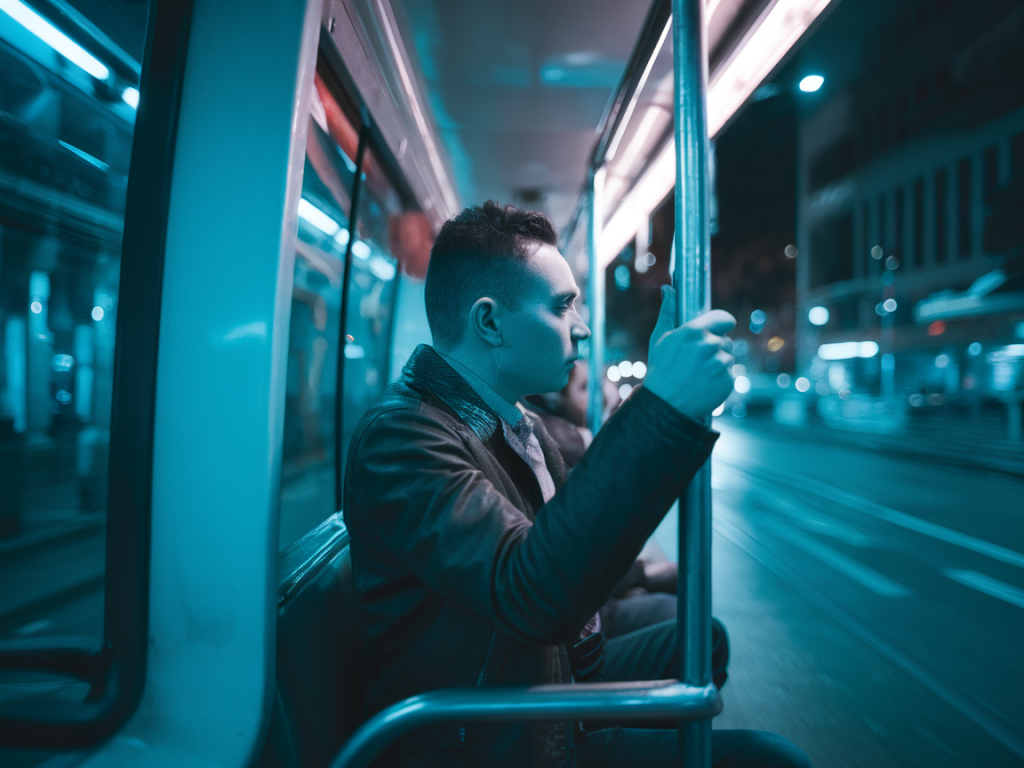
How to ride Buenos Aires colectivos at night to reach parrillas locals actually trust

How to ride Buenos Aires colectivos at night to reach parrillas locals actually trust

There’s a specific kind of joy in boarding a Buenos Aires colectivo at night with nothing but a street map in my pocket and the smell of charcoal promising a late dinner. Over the years I’ve learned that the best parrillas — the ones porteños actually go to — don’t advertise with flashy signs; they’re discovered by taking buses to neighborhoods where locals eat late, reading the body language of people queuing for slices of grilled entraña, and trusting small clues: a line waiting for empanadas, plates cleared in a hurry, smoke staining an awning. Here’s how I navigate colectivos after dark to reach those authentic parrillas, plus practical tips to keep you safe, efficient and ready to eat.

Why take colectivos at night?

First: colectivos are part of the city’s rhythm. They’re cheaper than taxis, they drop you closer to residential parrillas, and they carry the pulse of neighbourhood life after midnight. In neighborhoods like Almagro, Boedo, Chacarita, Villa Crespo and parts of San Telmo, the real parrillas open late and fill with locals who’ll point you to the daily special faster than any review site.

Before you leave: apps, cash and the SUBE card

My pocket checklist before hopping on a colectivo at night:

  • SUBE card: Most buses require the SUBE card (the city transport smartcard). Load it ahead of time at kiosks or subway stations. Night buses still expect SUBE; drivers will accept cash on a few routes but it’s less common and sometimes frowned upon.
  • Top-up amount: Keep ~ARS 300–800 on the card for a couple of rides and maybe the metro return. Night schedules mean you might need to transfer or take longer routes.
  • Apps: Install BA Cómo Llego, Moovit or Google Maps. BA Cómo Llego is the local favorite and shows bus numbers, boarding stops and expected arrival times. I also save the parrilla address or landmark in WhatsApp or notes so I can share it if I get lost.
  • Cash and small change: Even with SUBE, carry small notes and coins. A quick empanada stop or a small tip is easier with cash.
  • Reading routes and picking the right bus

    Colectivo numbers can be intimidating, but locals use a few mental shortcuts. Routes are often named for their start and end points, and the number is what you need to memorize. Use the apps, but also watch the destination sign on the windshield — it’s the best confirmation that the bus goes near your parrilla.

    Look for buses that travel through the central avenues bordering neighbourhoods where parrillas thrive: Cabildo, Corrientes, Rivadavia, Av. de Mayo. If your target is a neighborhood parrilla (not a tourist trap), try buses that run across residential blocks rather than only down tourist arteries. For example:

    NeighborhoodType of routes to look for
    Almagro / BoedoRoutes crossing Corrientes and Avenida La Plata; smaller lines that thread east-west
    ChacaritaLines connecting to Federico Lacroze or along Avenida Corrientes — good for hidden parrillas
    San TelmoBuses that stop near Defensa and Paseo Colón; look for lines that continue south

    Boarding and paying like a local

    At night local etiquette matters:

  • Board at the front: Unless specified, get on through the front door to validate your SUBE near the driver.
  • Say the destination out loud: Drivers often ask where you’re going. A quick “Voy a (neighbourhood) — ¿pasa por (street)?” helps avoid awkward exits. It’s normal and efficient.
  • Validate immediately: Tap SUBE once as you board. Keep the card accessible in a pocket, not buried in a bag.
  • Offer exact change if paying cash: If a driver accepts cash (some do at night), hand it with a short “Gracias” and expect minimal change.
  • Staying safe and comfortable after dark

    Buenos Aires is generally safe in many neighborhoods after dark, but like any major city, you should be mindful. These are my habitual precautions:

  • Choose a seat near the driver or in a populated area of the bus. It’s not rudeness — it’s practical.
  • Keep valuables in front pockets or a money belt. I tuck my camera into a protective pouch and keep it under my arm rather than on an outside pocket.
  • Watch your stop. Set an alarm on your phone or tell the driver where to stop. If you’re not comfortable asking, use the stop button and listen for people disembarking.
  • If the bus route looks suspiciously deserted after a certain hour, consider hopping off at a well-lit intersection and walking a block to the parrilla.
  • How to find parrillas locals actually trust

    Once you’re off the bus, look for cues that the place is genuine:

  • Local clientele: Families, older men at the counter, groups finishing their bottle of Malbec — these are good signs.
  • Simple menus: Smaller, focused menus where meat is the star rather than a long list of international dishes. Look for asado, entraña, chorizo, morcilla and house-made provoleta.
  • Grill visible from the street: You’ll often see the parrillero working over charcoal. Smoke and the sound of meat sizzling is the honest advertisement.
  • Ask the staff: My go-to question is “¿Qué me recomienda?” and then watching how they answer. A confident, quick suggestion usually points to specialties.
  • Useful Spanish phrases for night colectivo-and-parrilla runs

    Brush up on these and you’ll move faster and more confidently:

  • ¿Este colectivo va a (neighbourhood/street)? — Does this bus go to (place)?
  • ¿Me deja en (name the street)? — Can you drop me at (street)?
  • Una porción de entraña, por favor. — A portion of skirt steak, please.
  • ¿Qué me recomienda? — What do you recommend?
  • La cuenta, por favor. — The bill, please.
  • Photo tips: capturing the parrilla scene at night

    I travel light — a compact mirrorless camera and a 35mm or 28mm lens — but these quick rules help when shooting low-light street scenes:

  • Use a fast prime (f/1.8–f/2) to catch torch-lit faces and grill embers without a tripod.
  • Shoot the glow of the parrilla from the side to capture texture: charred meat, embers, wet street reflections.
  • Sneak close-ups of hands serving provoleta or the parrillero’s tongs. These details tell the story more than an empty dining room shot.
  • What to do if you miss your stop

    It happens. If you miss your stop at night, don’t panic:

  • Get off at the next stop and use your app to find the shortest return walk or catch a return colectivo.
  • Ask the driver: many drivers will signal or stop if you explain quickly and politely.
  • Use a taxi app (Uber, Cabify) as a fallback — more expensive but reliable for late returns.
  • Riding colectivos at night to reach a parrilla that locals trust is part logistics and part intuition. With a charged SUBE card, a helpful app, a few phrases in Spanish and a willingness to follow the smoke down a side street, you’ll find the plates where families argue over chimichurri and the grill master knows everyone’s order by heart. That’s the reward: a simple meal, bright with flavour and full of the small human details that make a city worth wandering.

    You should also check the following news:

    Travel Tips

    How to photograph rainy neon alleys in Tokyo's Shimokitazawa with a compact mirrorless and no tripod

    16/07/2026

    I love Shimokitazawa after a rainstorm. The narrow alleys become lacquered mirrors, neon signs double in puddles and the whole neighborhood hums with...

    Read more...
    How to photograph rainy neon alleys in Tokyo's Shimokitazawa with a compact mirrorless and no tripod
    Travel Tips

    How to map a three‑stop cheap‑eats route across Lisbon using Viva Viagem and trolley lines

    09/07/2026

    I like building food routes the way some people collect maps: with curiosity, a little thrift, and an eye for the way transit lines stitch a city...

    Read more...
    How to map a three‑stop cheap‑eats route across Lisbon using Viva Viagem and trolley lines