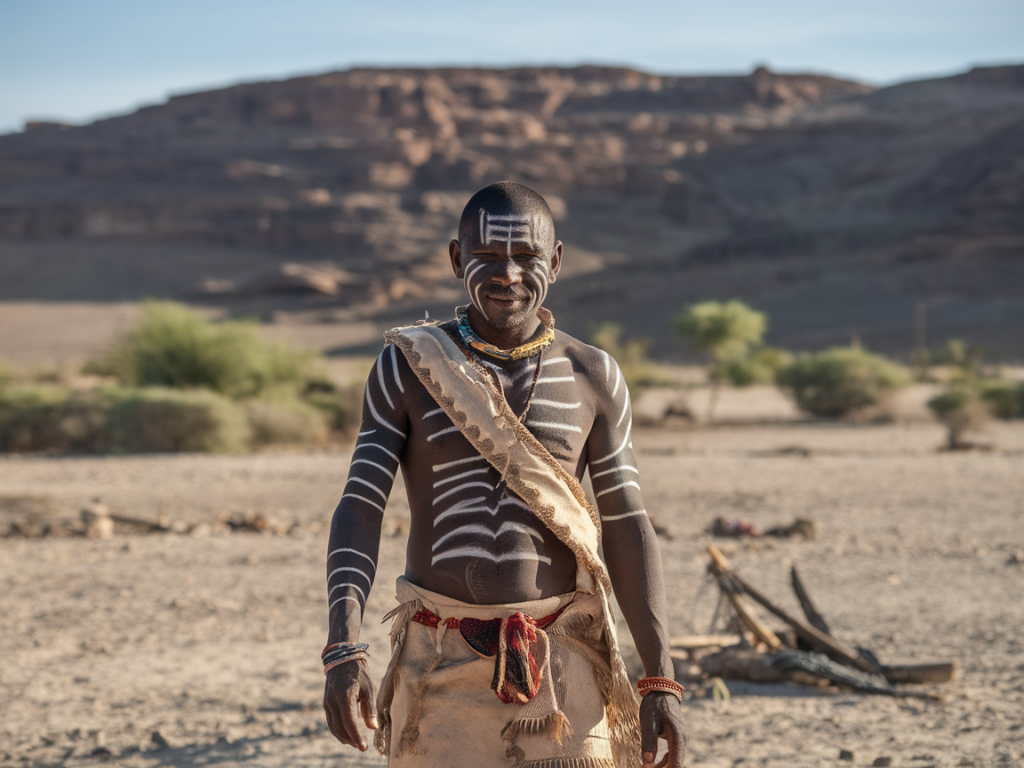
I arrived in the Kalahari ready to be an observer. What I found was an invitation: to slow down, to listen, to adapt my senses to a different tempo of life. In this piece I write about my time living with the San in the heart of the Kalahari — an experience that reshaped how I think about daily survival, storytelling, and belonging. I focus here on practical details, cultural context and the ethical questions any traveler must ask before stepping into this world.
Why choose to live with the San in the Kalahari?
At first it was curiosity: how do people live in a landscape that seems so empty to outsiders? Then it became respect. The San (often called Bushmen in older literature) embody deep ecological knowledge and social practices that have been refined for millennia. If you are reading this to plan your own immersion, know that vivre avec les San au cœur du Kalahari is a commitment — not a short safari stop.
Where I stayed and how I arranged the immersion
There are different ways to experience the San: organized cultural villages aimed at tourists, community-run camps, and long-term stays with families (usually arranged through a trusted intermediary or NGO). I spent time in a community-run camp near Ghanzi in Botswana, arranged through a local guide who has long-standing relationships with San families. Practical tips:
Daily life: routines, food and work
Living with the San means aligning with their daily rhythms. Days start early to avoid the hottest hours; much of the morning is spent tracking plants and game, repairing tools, or teaching children. Meals are communal and pragmatic.
- Food: Diets are varied and seasonal — mongongo nuts, wild tubers, fruits, insects and small game. During my stay we also shared maize porridge and occasional meat from community hunts.
- Water: Water is precious. Collecting and conserving water is part of everyday knowledge — from identifying root-bearing plants to locating ephemeral pans after rains.
- Work: Foraging and hunting are still practiced, often complemented by craft sales and wage labor around towns. Many households combine traditional livelihoods with casual work in Ghanzi or other settlements.
Language, songs and storytelling
The San languages are linguistically fascinating, full of click consonants and intimate place-based vocabulary. Even without fluency you will quickly learn a few greetings and how certain clicks map onto meanings. Songs and storytelling are central: they transmit ecological knowledge, genealogy and social values.
Practical safety, health and logistics
Living in the Kalahari is not dangerous per se, but it does require preparation.
- Health: Bring a well-stocked first-aid kit, sun protection and antimalarial advice (consult your doctor; risk in central Kalahari is lower than wet lowlands but check current guidance).
- Transport: 4x4 vehicle recommended for sandy tracks. Expect long distances between services — fuel up in towns like Ghanzi.
- Permissions: Some communities ask visitors to sign agreements or contribute to community funds. Respect local rules about where you can camp or photograph.
Ethics and responsible tourism
Immersion can be extractive if poorly planned. Here are ethical principles I practiced and recommend:
- Compensation: Ensure payments go directly to hosts or a community-managed fund, not solely to intermediaries.
- Consent: Always ask before taking photos, joining ceremonies or entering private spaces.
- Reciprocity: Bring useful gifts (solar lamps, school supplies) rather than trivial souvenirs. Coordinate with community leaders to find what’s genuinely helpful.
- Avoid commodifying culture: Support initiatives that prioritize living dignity (e.g., community-run crafts cooperatives) over staged performances.
What I learned: ecological knowledge and survival techniques
Some lessons were practical — how to find water in a dry pan, how to identify edible bulbs under a thin crust of sand. Others were philosophical: a different sense of time, less about deadlines and more about seasonal cycles. Here are concrete skills I observed or practiced:
- Reading spoor and subtle vegetation cues to locate game.
- Using traditional bows and simple snares for small mammals.
- Processing mongongo nuts and preparing them for storage — a critical drought-proof food source.
Numbers and context: quick stats
To situate this encounter in broader terms:
- Estimated San population in southern Africa: ~100,000 (regional estimates vary).
- Estimated San population in Botswana: roughly 40,000 (estimates differ by source and definition).
- Community-run tourism projects in Botswana: dozens of initiatives exist, though the exact number changes as projects start and stop.
Sources for these figures include Survival International, Botswana tourism publications and academic overviews (see sources below).
Comparing immersion options
Depending on your comfort level and goals, choose among commercial cultural villages, community-run stays, or voluntary projects. Below is a simple comparison table I used when choosing my stay.
| Option | Comfort | Community Benefit | Typical Duration | When to Choose |
|---|---|---|---|---|
| Commercial cultural village | Medium — basic lodgings, guided demos | Variable — may pay performers, not always community-owned | 2–4 hours to 1 night | Limited time, short exposure |
| Community-run camp | Basic to comfortable — community-managed | Higher — revenues often shared locally | 2–14 days | Authentic, respectful immersion |
| Volunteer/long-term stay | Simple — involves work and integration | High if coordinated ethically | Weeks to months | Deep cultural exchange and learning |
Money, crafts and the local economy
Crafts remain an important income source: beadwork, ostrich-shell beads, leatherwork and carved items. I recommend buying directly from makers and asking about fair prices. Small donations are appreciated but sustainable income comes from consistent market access and fair trade channels.
How to prepare mentally and emotionally
This kind of immersion will test impatience and preconceived notions. Cultural humility is essential: arrive ready to be corrected, to ask open-ended questions, and to lose the need to "understand" everything immediately. Silence is not emptiness — it is an active social space in which songs, observation and attention matter.
Recommended resources and further reading
- Survival International — advocacy and background on indigenous rights.
- Botswana Tourism — practical travel info and community tourism listings.
- National Geographic — ethnographic and photographic features on San cultures.
- Academic sources: Look for anthropological work by scholars such as Richard Lee and Anneke van Waardenburg for in-depth context.
Snapshot checklist before you go
- Confirm community consent and clear communication with hosts.
- Arrange fair payment and clarify how funds are distributed.
- Pack sun protection, a sleeping bag, water purification tablets and a compact first-aid kit.
- Prepare small, useful gifts (solar lights, school supplies) rather than cash-only handouts.
- Learn a few words in the local tongue and practice respectful listening.
Practical contacts and booking tips
Start with community trusts and reputable operators in Ghanzi or Maun. Ask for references and photos of the actual camp (not promotional staging). If you want a longer stay, seek projects that have transparent governance and a record of responsible tourist integration.
Living with the San in the Kalahari is not a quick photo opportunity — it is a slow apprenticeship. Over days, then weeks, I moved from spectator to a modest participant in daily routines, and that shift is what I recommend to anyone who wants to truly experience this landscape and its people.
Sources: Survival International, Botswana Tourism Authority, National Geographic and peer-reviewed ethnographic studies on San lifeways (links in the Recommended resources section).