Why I map a mixed cash-and-card street-food loop
When I wander Seoul at night, I like a route that feels fluid: a few market stalls that only take cash, a couple of tented pojangmacha where a card swipe is a bonus, and a short subway hop paid with my T‑money card. Planning this kind of loop means you can follow your hunger without being stranded when a vendor says “cash only.” Over the years I’ve learned to map a route that balances predictability (subway transfers, opening hours) with serendipity (alleyway stalls, rooftop bars). Here’s how I do it, step by step, with practical tips for late-night safety and etiquette.
Tools I use to map the loop
I rely on a small toolkit so I can stay nimble:
- Naver Map and KakaoMap — far more accurate for walking and small alley routing in Korea than Google Maps.
- T‑money card (physical) — for subway, bus, taxis and many convenience store purchases.
- KakaoPay or international contactless card — increasingly accepted at modern stalls and pojangmacha.
- A lightweight offline note or map screenshot — in case you hit a patch of slow mobile data late at night.
Sample cash-and-card street-food loop I like
This is a loop I’ve walked many times, starting in Jongno and finishing at Noryangjin — it mixes classic market bites, alleyway tents, and a seafood finale:
- Gwangjang Market — bindaetteok (mung bean pancake), mayak gimbap — mostly cash-friendly stalls.
- Jongno 3‑ga alley pojangmacha — skewers, tteokbokki and soju; some accept cards, many prefer cash.
- Walk along Cheonggyecheon for digestion and photos — free, safe, neon-lit at night.
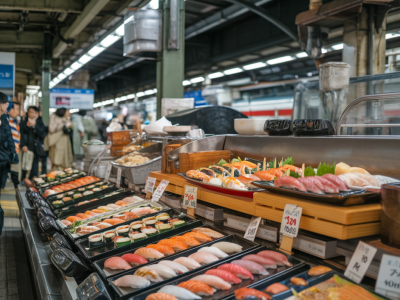
- Short subway ride (pay with T‑money) to Noryangjin Fisheries Market — pick a stall and head to the tented area for late-night raw seafood and grilled dishes.
How to plan the route on your phone
1) Open Naver Map or KakaoMap and pin your start (market) and end (seafood market). These apps show the best walking alleys and subway entrances — crucial in Jongno where tiny lanes matter.
2) Add a public transit leg between the two markets and check transfer times. With T‑money you can hop a subway without buying single tickets; it also gives you fare caps and transfer discounts.
3) Screenshot the route and write down the subway stations you’ll pass — Seoul’s cell signal is excellent but capturing a backup screenshot keeps the night moving.
Using T‑money smartly
T‑money is my Swiss Army knife in Seoul. Here’s how I use it:
- Top up at any convenience store (CU, GS25, 7‑Eleven) or subway machine. I usually keep about 10,000–20,000 KRW on it for an evening loop.
- Tap in/tap out on buses and subways. It automatically handles transfer discounts — handy if your loop includes a bus leg to reach a neighborhood of tents.
- Use it at convenience stores to withdraw small amounts of cash (cashback at purchase) if you’re low on coins for a pojangmacha.
- Mobile T‑money (via KakaoPay/T‑money app) is convenient but remember some small vendors accept only physical cards or cash.
Cash vs card at pojangmacha — what to expect
Pojangmacha (those cozy, plastic-covered tent stalls) are part of the night’s charm. Yet payment habits vary:
- Smaller, older tents often prefer cash — especially for quick skewers or late-night soju rounds. Keep 20,000–30,000 KRW in small bills to avoid awkwardness.
- Newer or more touristed tents may accept contactless cards or KakaoPay. Always ask “card ok?” or show your card and listen for a POS machine.
- Even if a vendor accepts cards, small card minimums can apply. Carry change for split bills or to tip with a small gesture (placing cash visibly is standard).
Safety and late-night etiquette
Seoul is generally safe at night, but there are a few local practices to keep your evening pleasant:
- Stay aware in crowded alleyways. I keep my camera strap short and my bag zipped — a simple precaution in lively markets.
- If you’re tired or tipsy, take a taxi with T‑money (tap inside taxis that accept it) or use Kakao T app; it’s safer than wandering unknown backstreets.
- At pojangmacha, emptying your bowl/tray on the table is normal — but don’t move chairs or tents without asking. If you share a table, seating etiquette is casual but polite; avoid sprawling into someone else’s space.
- If someone is overly insistent or you feel uncomfortable, step back and say “gwenchana” (it’s okay) and leave — vendors are used to tourists rotating through.
Short phrase cheatsheet for ordering
These small phrases have saved me many times. Show them on your phone or say them confidently:
- “Igeo juseyo” — “This please” (point and say this)
- “Myeot myeon juseyo?” — “How many? / How much?”
- “Kkomaeul juseyo” — “A small portion please” (useful for markets)
- “Kakwa hamnida” — “Thank you” (or “kamsahamnida”)
Budget table for the loop (estimates)
| Stop | Typical cost (KRW) | Payment |
|---|---|---|
| Gwangjang bindaetteok + gimbap | 6,000–10,000 | Cash preferred |
| Jongno pojangmacha (skewers + soju) | 10,000–25,000 | Cash or card (varies) |
| Subway (T‑money) | 1,350–1,650 | T‑money |
| Noryangjin seafood tent | 20,000–40,000 (shared plates) | Cash/card possible |
Final practical tips I always follow
- Carry small bills and coins — nothing kills a street-food vibe faster than asking for change at 1 a.m.
- Top up T‑money early in the night at a convenience store to avoid busy subway kiosks.
- Use Naver/Kakao maps for alley routing — they often show which staircases and exits are closest to the stalls.
- Leave room for improvisation. The best bites I’ve found were the stalls I hadn’t planned for — the loop is a guide, not a schedule.
With a charged phone, a topped-up T‑money, and a small stack of bills, you’re set to map a delicious, safe, and flexible night of street food in Seoul. Roam with curiosity — and taste boldly.