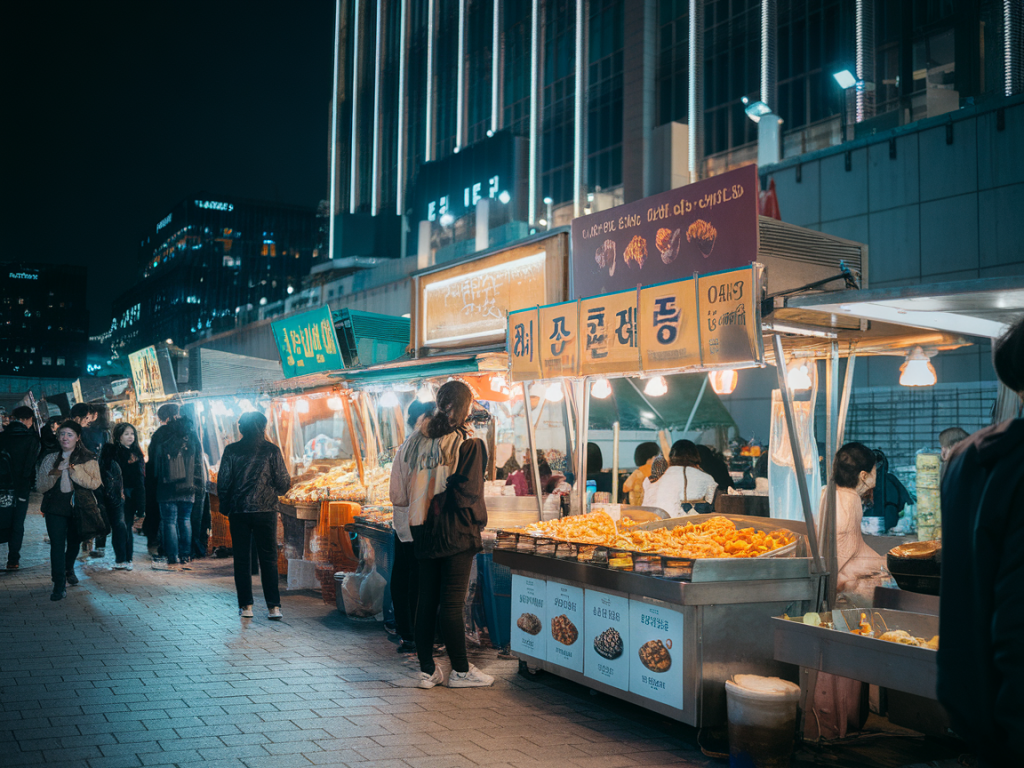
I count nights in Seoul the way some people collect postcards: by markets. Each maze of stalls is a small city of its own—sizzling woks, steam rising from bamboo baskets, neon reflections on wet pavement. If you want to taste Seoul like a local after sunset, join a night-market food circuit. Below I share where I go, how I link stalls into a walkable route, what to order (and what to avoid), and a few photography and etiquette tips so your night tastes and looks great. This is written from the perspective of someone who prefers roaming alleys to sitting at tourist restaurants—expect practical maps, photo-led instincts, and food rituals you can replicate.
Where locals gather after dark
Seoul’s night markets are varied: huge, organized markets; seasonal pop-ups by the Han River; and smaller neighborhood clusters where residents meet for late eats. These are my favourite spots to join a local circuit:
Gwangjang Market (Jongno): the classic. Fabrics by day, food stalls by night. Loved for bindaetteok (mung bean pancake), hand-made mayak gimbap and soondae (blood sausage).Dongdaemun Night Market (near Dongdaemun History & Culture Park): deep into the night, skewers, fried chicken, and fashion stalls—perfect if you want shopping and snacking.Myeongdong Street Stalls: touristier but great for quick handhelds—hotteok, giant skewers, and flamboyant desserts.Bamdokkaebi Night Market (seasonal, along the Han River): food trucks and pop-ups with a lively, mixed-crowd vibe. Best on mild-weather weekends.Mangwon Market (Mangwon-dong): a neighborhood favourite. A quieter, more “local” night scene where families and students eat together.Noryangjin Fish Market (near Seoul Station): if you want fresh seafood late into the night—pick your fish and have a stall prepare it.Namdaemun Market (near Hoehyeon): huge, chaotic and full of street food classics—try the kalguksu (handmade knife-cut noodles) and dumplings.How to join a local circuit (without a guide)
Joining a circuit is less about signing up and more about following rhythm and crowd flow. Here’s how I do it, step by step:
Start where locals arrive: look for queues by small stalls. Locals rarely stand in line for the photo opportunity; they queue for a stall that consistently delivers taste and speed.Mix standing stalls and sit-down pockets: a single night circuit often alternates between standing-eat stalls (odeng, tteokbokki) and small seated restaurants (jjigae, sundae). It keeps the pace lively and your stomach flexible.Share plates and move: order two or three things at each stop to split with friends or new table-mates. Sharing is how locals try more dishes and keeps you light enough to continue.Use transit to string circuits together: hop between neighborhoods on the subway—Seoul’s system is fast and cheap. T-money card on your phone or a prepaid card is essential.Stalls and dishes you absolutely shouldn’t miss
I separate “must-try” staples from lesser-known local favourites. The exact stall names can change, but the dishes are constants. Ask for the local version—people will point you to their favourite vendor.
Mayak gimbap (Gwangjang and other markets) — tiny rice-and-seaweed rolls with addictive soy-sesame dipping. The name means “drug gimbap” because they’re so moreish. Best eaten with a side of kimchi and a small cup of soju or makgeolli.Bindaetteok (mung bean pancake — Gwangjang) — crisp on the outside, savory and slightly oily. Perfect with a swig of makgeolli (rice wine). Look for the large sizzling pans and a batter that smells nutty.Tteokbokki (spicy rice cakes — many street stalls) — an essential chew and spice combo. Some vendors serve with extra fish cake skewers; others add ramen or cheese for richness. Adjust spice by pointing and smiling.Odeng / Eomuk (fish cake skewers) — late-night comfort food, often in a flavorful fish broth you can sip. Best on cold nights.Hotteok (sugar-filled pancake — Myeongdong and markets) — sweet, greasy and fragrant; pick one from a stall making them fresh on a hot griddle.Raw fish / Hoe (Noryangjin) — choose your fish, then ask to have it sliced at an adjacent stall and served with small side dishes and soju. It’s a local ritual more than a quick snack.Grilled skewers and dakkochi — chicken skewers with spicy or soy glaze. Great for handheld walking and sharing.Prices, portions and practical expectations
Night-market food is affordable but varies by market and dish. Expect:
Simple skewers, odeng cups and street snacks: 1,500–5,000 KRW.Plates for sharing (pancakes, larger skewers, bowls): 6,000–15,000 KRW.Fresh fish set-ups at Noryangjin if you buy and prepare: 30,000–80,000 KRW depending on the fish and number of side dishes.Carry small bills and some change; many stalls prefer cash, but more markets accept card or mobile payments now. I always keep a 10,000 KRW note handy for sudden cravings.
Etiquette and safety tips
Street-food culture in Seoul has unspoken rules. Respect these and you’ll blend in quickly:
Stand or sit where locals do. If a stall has standing counters, don’t hog a seat—rotate promptly.Share and pass plates around. Korean dining is social, especially at markets.Don’t photograph people without asking. Vendors usually don’t mind photos of food or the stall, but families and friends might prefer privacy.Dispose of trash properly. Look for small bins or ask a vendor; many markets have bag stations for compostable waste.If you’re taking a photo of food under neon, reduce ISO and use slower shutter or steady hands—your compact mirrorless camera will be perfect for the saturated, tactile light.My go-to night-market circuit in one walk
When I want a compact but thorough night of eats, I stitch this quick route together starting from Jongno:
Begin at Gwangjang Market: bindaetteok and mayak gimbap to warm up.Walk toward Cheonggyecheon stream, stopping at small odeng stalls by the water for a restorative broth.Cross to Jongno 3-ga and seek out a hidden chimaek (chicken + beer) alley for shared dakkochi or fried chicken if I'm with friends.Finish at the Han River Bamdokkaebi (seasonal) or a late Noryangjin roll for raw fish—depending on mood.Quick reference table for planning
| Market | Vibe | Best dishes | Hours |
| Gwangjang | Historic, lively | Bindaetteok, mayak gimbap, soondae | Open late into night, busiest 18:00–22:00 |
| Dongdaemun Night Market | Nocturnal, shopping + food | Skewers, fried chicken, street desserts | Evening to 02:00 |
| Noryangjin | Seafood-focused, rowdy | Fresh sashimi sets | Late night open; many stalls 24:00 close |
| Bamdokkaebi (Han) | Seasonal, festival feel | Food trucks, fusion street bites | Seasonal weekends |
If you want a custom route for a specific night, neighbourhood or photography focus—tell me the date, who you’ll be with and what you like to eat. I can sketch a walkable circuit that matches pace, light and appetite so you leave with full senses and smart photos to remember the night.