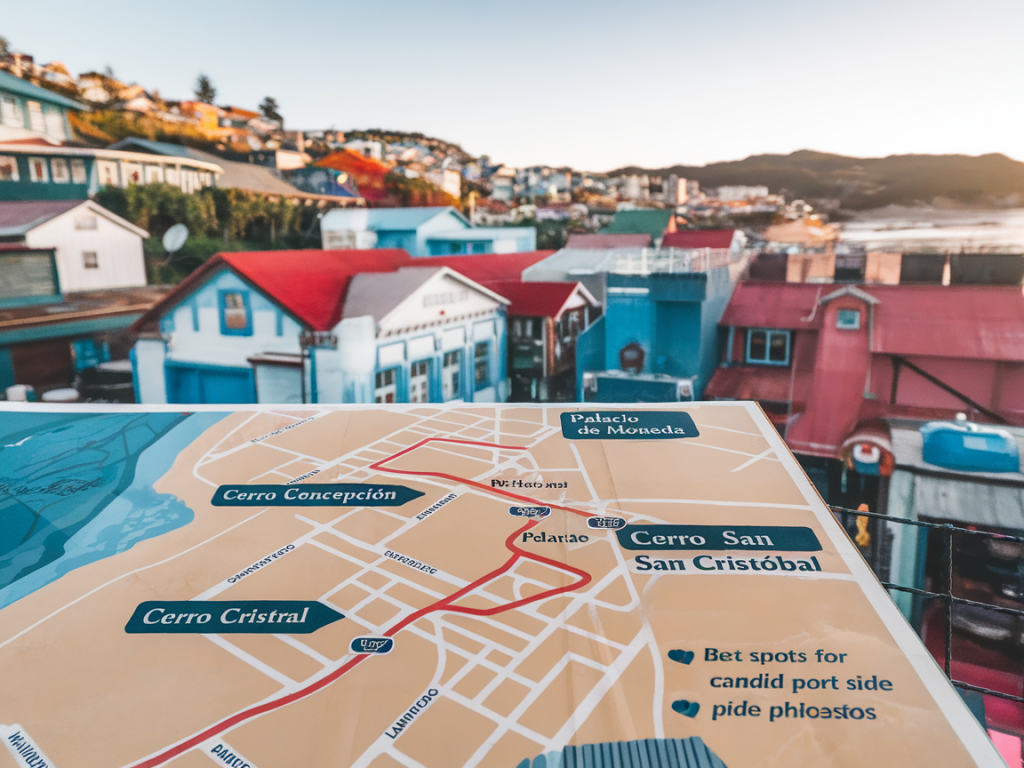
I teach myself to navigate cities by their markets. In Valparaíso, that means waking before the sun and threading through the cerros — the steep hills that hold the city's pulse — to catch vendors setting up, fishermen sorting their morning haul and the pink light over the bay. This 90‑minute dawn route is what I use when I want candid, port‑side photos that feel intimate rather than staged: quick, sensory, and full of small human stories. Below I map the route, the exact turns I take, what to look for, and the camera choices that help me disappear into a scene.
Why a 90‑minute route?
Short routes force focus. Ninety minutes is enough to reach a few key market nodes, react to light changes, and create a coherent photo essay without wearing out the scene. Dawn gives you the soft, directional light that reveals texture — wet cobbles, crates of fish, weathered wooden boats — without the harsh shadows or the crowds that arrive later. In Valparaíso, the magic window is often between 05:30 and 07:00 depending on season.
Getting there — start point and transport
I start at the Plaza Sotomayor area near the port; it's easy to reach from most parts of the city and offers multiple options for public transport or a short taxi ride. If you're staying in Cerro Concepción or Alegre, it's a brisk 15–25 minute walk downhill. Otherwise, a colectivos taxi or Uber will drop you off near the naval base — aim for the eastern edge of the plaza so you can head straight for the water and the Mercado Puerto.
My 90‑minute route (step‑by‑step)
Where to stand, what to aim for
For candid port‑side images I follow a few simple rules:
Camera gear and settings I use
My kit is intentionally compact — I want to be nimble on steep stairs and in crowds.
| Item | Why |
|---|---|
| Compact mirrorless body (Sony a7 series / Fujifilm X‑T series) | Light, quiet, good high‑ISO performance |
| 35mm f/1.8 or 28mm f/2 | Natural field of view for environmental portraits and street context |
| 50mm or 85mm f/1.8 (optional) | For tighter candid portraits with shallow depth of field |
| Small shoulder bag or sling | Quick access and minimal intrusion |
| Spare battery, microSD/CFExpress card | Dawn shoots are cold; batteries die faster |
Typical settings I start with at dawn: ISO 400–1600 depending on light, aperture f/2.8–f/5.6 for a balance of subject separation and context, and shutter speed no lower than 1/200s for handheld movement when people are moving. If I'm on the pier and I want silky water, I use a mini tripod and neutral density filter for long exposures after the sun rises.
How to be respectful and candid
Port markets are working places. My approach is to make myself small and useful: smile, keep my camera at chest height, and never point directly at someone's food stall from a close distance. When in doubt, ask — a brief "¿puedo tomar una foto?" (can I take a photo?) goes a long way. Most vendors in Valparaíso are used to cameras; many are proud to be photographed if you show interest in their story.
Safety and practical tips
Valparaíso is safe at dawn in the port areas I recommend, but standard travel caution applies: keep gear close, use a shoulder strap, and carry only the cash and documents you need. I leave larger backpacks in the hotel and take a photocopy of my passport. Footwear matters — non‑slip soles are essential on wet cobbles and wooden ramps.
Shot list to aim for during the 90 minutes
Timing and light — reading Valparaíso's dawn
In summer the dawn comes early and the light is soft and warm; in winter it's cooler and the golden hour lingers. Cloud cover can be a photographer's ally: it diffuses harsh sunlight and keeps the mood low and intimate. Pay attention to the angle — the best port‑side backlight is when the sun is just above the horizon behind the photographer, creating rim light on water and smoke. When the sun climbs, shift to shaded alleys to preserve mood.
Local phrases that help
A few simple Spanish phrases smooth interactions:
What to do with the photos after the walk
I usually edit a short series of 8–12 images that together tell a morning at the mercado: a close detail, a portrait, a ritual, and a wide view. On Acidadventure I pair these with short captions that note location, time and the small story behind a person or object — that context turns a good photo into a memorable one. If you're sharing on social, use a local hashtag and credit the neighborhood to help others discover these spots responsibly.
One last practical note: dawn in Valparaíso is intimate and brief. Move slowly, breathe the salt air, and let the city reveal itself in small gestures rather than grand scenes. Ninety minutes is enough to come away with images that feel like you were there, not just passing through.