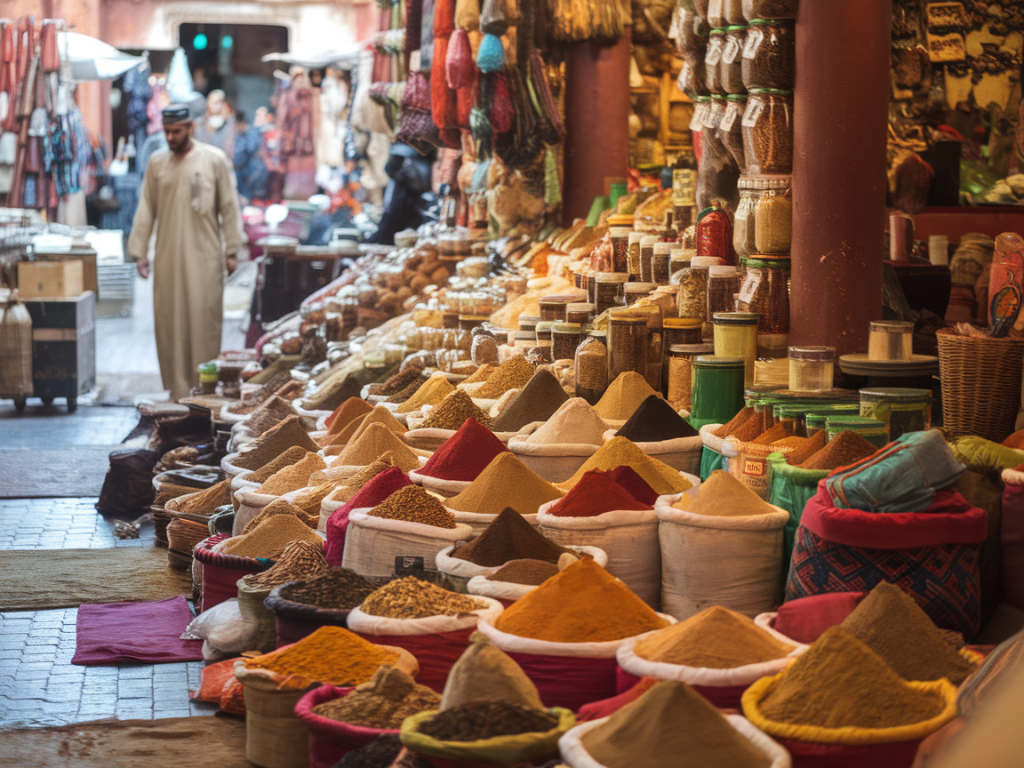
I roam markets the way other people collect postcards: by aroma. In Marrakech, the spice scene is as much about the stalls and the vendors’ stories as it is about the jars and sacks themselves. Lately I’ve been spending more time in the city’s newer markets — the artisan clusters in Sidi Ghanem, the boutiques that have popped up in Gueliz, and the reworked alleys that blend traditional souk stalls with modern packaging — hunting for authentic spices and learning how to bring them home without them being seized, smashed or emptied by customs.
Where I go first: the new markets and artisan districts
If you want tried-and-true souk energy, Jemaa el-Fna and the old medina remain magnetic. But for reliability, traceability and cleaner packaging, I head to the newer market areas where artisans and small producers present spices like designed products.
My favourites:
Sidi Ghanem industrial and artisan quarter — a former workshop district now full of design studios, cooperatives and small spice producers who package carefully for export. You’ll find single-origin saffron, labeled ras el hanout blends and jars of preserved lemons here. Shops are used to visitors and can provide invoices and sometimes phytosanitary documentation on request.Gueliz boutiques and gourmet stores — fewer sacks on the floor, more tidy jars on shelves. Look for shops that list origin and processing: “saffron from Taliouine,” “cumin, sun-dried and sieved.” These places are ideal if you want spices that will travel well and be respected by airline security.Cooperative stalls and women’s collectives — often near smaller neighbourhood markets and the newer museum quarter. They sell high-quality local mixes and preserved products (like preserved lemons or argan oil blends) and are great for buying small, ethically produced quantities.When you ask for directions, say you’re looking for épices or herboristerie. Vendors in these newer markets are used to tourists but appreciate curiosity: ask how the spice is produced, whether it’s blended locally, and whether it’s been heat-treated (useful information for customs).
How to spot authentic spices
Authenticity is both sensory and factual. Here’s how I check a jar before handing over dirhams:
Smell first — authentic spices will have a bright, complex aroma; powdered spices that smell flat or dusty are either old or adulterated.Ask for provenance — specific regions, crop year and whether the spice is single-ingredient or a blend. Good vendors will say “Taliouine saffron,” “Atlas mountain cumin,” or name the cooperative.Look at texture — whole seeds (coriander, cumin) and threads (saffron) are easier to verify; powders are convenient but more easily stretched with fillers.Request a small sample — many vendors will let you smell or taste a tiny pinch. It’s also a moment to negotiate.Prefer small, sealed packets or jars — they travel better and show you haven’t been sold a bulk-bin blend repacked that morning.What to buy (and what to avoid)
My travel spice bag usually contains:
Ras el hanout — the Moroccan house-blend. Buy from a seller who lists ingredients or lets you taste it in a simple tea or bread sample.Saffron — buy threads, not powder. Threads are easier to check for quality. Small sealed tubes are the safest option for travel and customs.Cumin and coriander seeds — whole seeds keep much longer and survive transit better than powders.Turmeric and smoked paprika — if you want powerful colour and flavour, buy sealed jars with clear origin notes.Preserved lemons (small jar) — a must for Moroccan dishes; choose a sterilized jar for travel.What I avoid: mysterious powders without origin, large sacks of seeds that are unlabelled, and any spice mixed with unknown fillers (sawdust has been reported anecdotally). Also be cautious with seeds or plant parts that might be banned in your home country — check rules first.
Bargaining and receipts: practical tips
Bargaining is part of the experience here, but in newer markets vendors often have non-negotiable prices, especially for labeled or export-ready goods. I usually:
Start by asking price, then request to smell/taste. If the vendor offers a cup of tea and a small sample, that’s a good sign of confidence.Buy in small quantities from several vendors if you want to compare flavours — this also helps with packing and customs later.Ask for a receipt or handwritten invoice, especially for larger purchases. If you’re buying saffron or a jar of preserved lemons, a receipt helps with customs queries and proves purchase for declared items.How to pack spices for flights
Spices are forgiving if packed well. Here’s my step-by-step packing routine, refined after more than a few flights and curious security checks.
Keep original, sealed packaging where possible — labels are your friend. Airlines and customs officers are less suspicious of clearly labeled, sealed products.For powders: double-bag — put the original packet into an airtight resealable bag (I like thick Mylar bags), then into a second bag or small hard-sided container. This prevents leaks and contains smell.For threads and whole seeds: use small glass jars or sealed tubes — they’re sturdy and keep the scent in. Wrap in clothing to cushion in checked luggage.Vacuum-seal for long trips — a portable vacuum sealer or vacuum bags dramatically reduce scent and protect against spills. Many small travel gadgets can be used on short trips; otherwise ask a vendor if they can vacuum-seal a purchase for you.Carry-ons vs checked baggage — carry-on is safer for high-value items (saffron, small jars). Security may swab powders in carry-ons, which is usually fine; checked luggage is better for larger jars (but you risk breakage).Label everything — write content and weight on the outside of the jar or bag. Customs officers appreciate transparency.Limit quantities for “personal use” — large bulk purchases attract attention. If you’re bringing more than a few hundred grams of certain items, be ready to explain purpose and show receipts.Customs and legal points to keep in mind
Customs rules vary. I always look up the regulations for my destination country before buying — and I carry documentation for larger purchases.
Seeds and plant material — some countries restrict seeds and unprocessed plant material. Whole seeds may be allowed in small quantities; others ban them entirely. If in doubt, avoid seeds or ask for a phytosanitary certificate for large orders.Animal-derived products — any spice mix containing animal products or insects (rare, but possible in artisanal blends) can be prohibited.Declare large purchases — better to declare and show receipts than to be caught. If customs asks, explain it’s for personal culinary use or gifts and show the invoice.Saffron and high-value items — treat saffron like jewellery: keep it in carry-on, keep receipt, and declare if its value exceeds duty-free allowances.Packing kit I travel with
Small items that save trips from becoming culinary disasters:
Thick resealable Mylar bags and small ziplock bagsOne or two small glass jars with tight lidsA roll of paper packing tape and some bubble wrap or clothing for cushioningSmall portable scale (for weight checks)Handwritten notebook with vendor names and prices — useful for customs if you lose receiptsBringing spices back from Marrakech is one of my favourite souvenirs: each jar captures a place, a conversation, a sunlit alley. With a little patience at the stalls, sensible purchases in the newer markets, and careful packing, you’ll get the flavours home intact and ready to transform your cooking. If you want, I can map a short walk through Sidi Ghanem and Gueliz with specific shops I trust — email me via the contact page and I’ll tailor a spice-shopping photo-walk for your next trip.