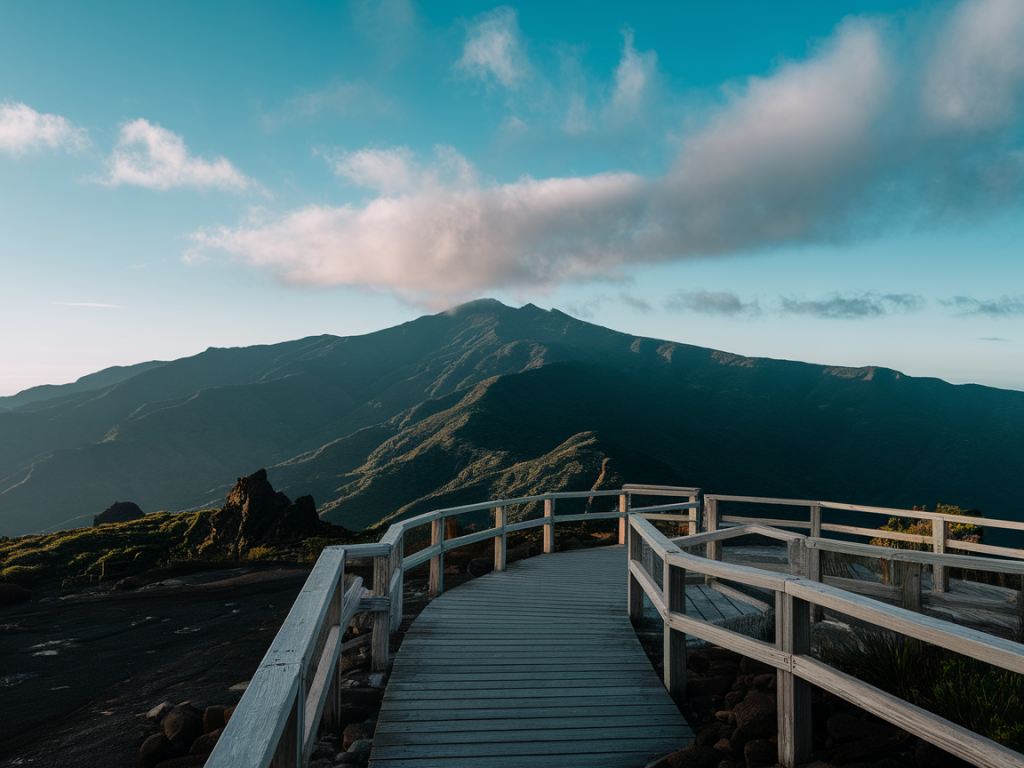
I write about cities and small-scale explorations, but some of my best memories come from climbing out of urban grids and standing above a sea of cloud. When I hiked Pico Ruivo in Madeira, I quickly learned that the adventure succeeds or fails depending on how well you can read the sky. This article focuses on conditions météo en montagne à Madère — the phrase is as practical as it is poetic, because mountain weather here is a language you need to learn before you step onto the trail.
Why "conditions météo en montagne à Madère" matter for Pico Ruivo
Pico Ruivo (1,862 m) sits high enough to be regularly in cloud or above it, depending on wind direction and time of day. That height, combined with Madeira’s steep relief and Atlantic exposure, creates constant variability. I’ve experienced sunny trailheads that turned into fog-wrapped ridges in twenty minutes, and clear summits that offered a wind so strong it felt like a coastal gale. Knowing the local conditions météo en montagne à Madère is not just comfort — it’s safety, navigation and timing.
Typical weather patterns and what they mean on the trail
Here are the patterns I watch for and how I interpret them when planning a hike to Pico Ruivo:
Cloud inversion (sea of clouds): Often in the morning or on stable anticyclonic days. If the valley is filled with cloud and the ridge is clear, expect bright sun and cool, dry air above the inversion.Fast-moving frontal clouds: Approaching low-pressure systems bring quick drops in visibility, sharp gusts and drizzle. Turnaround should be immediate if a front closes in.Fog and low stratus: Reduces visibility, makes paths slippery and hides trail markers. I slow down, use GPS tracks and increase spacing in my group to avoid separation.Strong winds from the north or west: Feels colder than the thermometer shows. On exposed ridges the wind can be sustained and dangerous when combined with wet rocks.Reading the sky: practical signs I use
Over time I developed a simple checklist of sky signals that tell me whether to hike, delay or change route:
High thin cirrus: Often precedes a front within 24–48 hours. I consider postponing if the forecast shows worsening conditions.Altocumulus or rapidly building cumulus: Indicates instability — possible showers or thunderstorms. I avoid ridge walking if I see these building toward noon.Darkening clouds from the west or southwest: In Madeira they usually mean rain is coming. I turn back if I’m on exposed terrain.Gaping horizon and fast cloud movement: Strong winds and turbulence; I secure loose items and consider lower-altitude routes.Useful forecasts and tools I trust
For accurate planning I combine global models with local sources. My go-to toolkit includes:
Windy — excellent for wind, precipitation radar and model comparison.IPMA (Portuguese Institute of the Sea and Atmosphere) — official forecasts, marine advisories and local warnings.MeteoBlue / Meteoblue mountain forecast — gives height-specific temperature and precipitation, useful for Pico Ruivo’s summit level.Local webcams (Areeiro, Achada do Teixeira) — nothing beats watching the ridge live to judge cloud cover and visibility.Trail apps / GPX tracks — I always carry an offline GPX and check estimated times against predicted weather windows.Packing and clothing adapted to mountain conditions
When I say "pack light," I mean pack smart. For conditions météo en montagne à Madère, layering and waterproof protection are non-negotiable:
Base layer: moisture-wicking synthetic or merino.Mid layer: fleece or light insulated jacket for summit chill.Shell: breathable waterproof jacket and overtrousers; windproof is essential on exposed ridges.Hat, buff and thin gloves: wind cuts heat rapidly at altitude.Sturdy boots with grip and gaiters: trails can be muddy or icy in winter mornings.Headlamp, personal locator (phone with offline maps) and emergency bivy: in poor visibility you may be slower than expected.Seasonal expectations — a quick reference table
| Season | Typical summit temps | Weather notes |
|---|
| Winter (Dec–Feb) | 2–10°C | Frequent cloud, cooler nights, occasional frost and rare snow on highest peaks. |
| Spring (Mar–May) | 6–14°C | Unstable transitions; sunny windows possible, but quick showers occur. |
| Summer (Jun–Aug) | 10–18°C | More stable, clearer mornings, but afternoon cumulus can form; best visibility early. |
| Autumn (Sep–Nov) | 8–16°C | Increasing frontal activity; more frequent rainy days late season. |
Timing your hike: early starts and weather windows
I prefer dawn departures for Pico Ruivo for several reasons: calmer winds, cooler temperatures for climbing, and a higher chance of being above a cloud inversion at sunrise. Afternoon tends to be when the atmosphere destabilizes — clouds build, visibility drops, and showers are more likely. If the forecast shows marginal conditions, choose the earliest window available.
On-trail behaviors when weather turns
Even with the best prep, conditions can change rapidly. Here’s how I act when they do:
Stop and assess. Look for escape routes and the nearest shelter or descent path.Check the map and GPS — don’t rely solely on visual cues when visibility is poor.Conserve heat: add layers and cover extremities immediately.Communicate: tell companions your plan and expected time to reach the next checkpoint.Turn back early. I have often abandoned summits halfway; the summit is optional, safety is not.Local hazards tied to weather
Madeira’s terrain amplifies certain risks:
Slippery volcanic and basalt rocks become treacherous under drizzle.Thunderstorms are rare but dangerous — avoid ridge lines and metal structures.Fog can create disorientation even on well-marked trails; keep to the path and use GPS tracks.Strong winds may cause rockfall in narrow passages; give yourself margin from cliffs.Final practical tips from my hikes
When I prepare for Pico Ruivo, I follow a checklist that keeps the focus on the weather:
Check two forecasts (global + local) and a webcam within 12 hours of departure.Plan for at least one extra hour on top of guidebook times to account for weather-imposed slowness.Share my route and ETAs with someone not on the hike.Bring a small emergency kit: whistle, space blanket, waterproof matches, and a power bank.Respect local ranger advice; they often have the best real-time sense of mountain microclimates.Reading the sky on Madeira is a skill you sharpen with each walk along the levadas and ridges. The phrase conditions météo en montagne à Madère covers more than numbers on a screen — it’s a set of behaviours, observations and decisions that turn a risky day into an unforgettable summit. Take your time, watch the clouds, and let the mountain tell you when to go and when to wait.