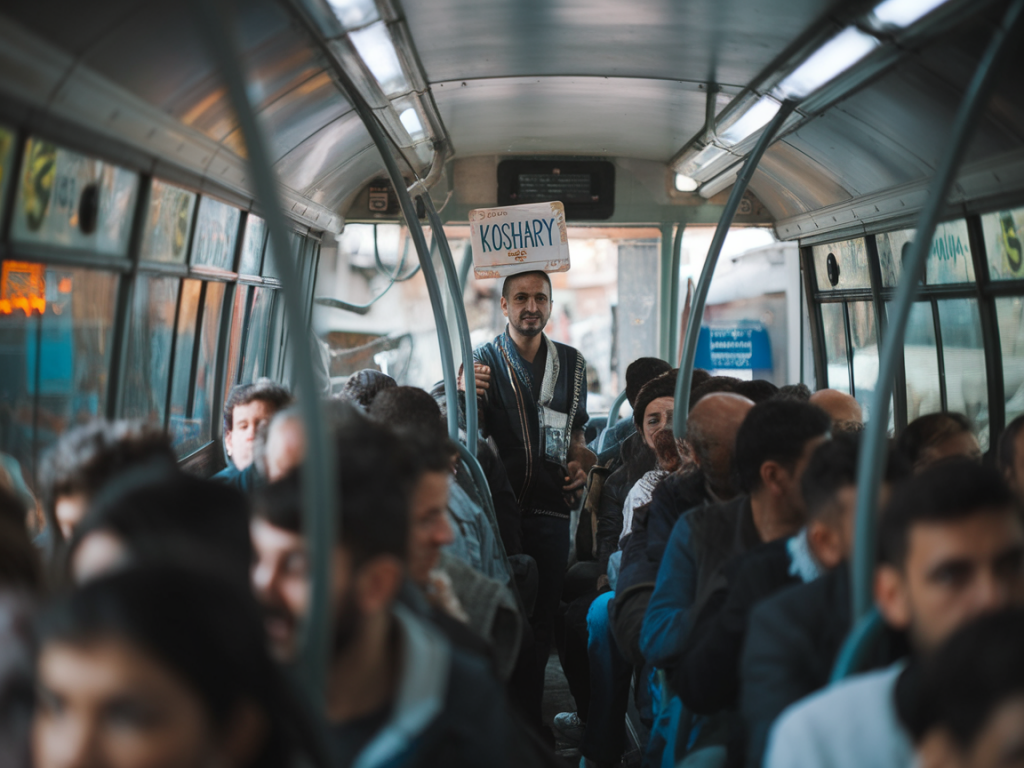
I remember my first ride on a Cairo microbus like a jolt — the engine coughing to life, a chorus of honks, and a driver who seemed to know every alleyway better than any map I had. Those rattling minivans are the pulse of the city: cheap, fast and utterly local. They are also the best way to discover tucked-away koshary stalls where lines are long because the food is worth it, not because a guidebook said so. If you want to reach the most authentic vendors and avoid tourist overcharges, microbuses are your friend — with a little patience, a few learned gestures and a good sense of timing.
Why take a microbus for food hunting?
Microbuses get you into neighborhoods where larger buses or taxis don’t venture, and drivers will often drop you off mid-block near a shop that doesn’t have a proper address. That’s crucial when you’re after hidden koshary stands — these are frequently family-run stalls tucked into alleys, behind mosques or next to produce markets. They’re also far cheaper than cabs and give you front-row seats to street life: traders pushing carts, men sipping tea, and the precise choreography of Cairo lunchtime.
How microbuses work — basics to know
Microbuses are privately operated minivans that run on set routes between neighbourhoods, main streets and transport hubs. There’s no printed timetable; they leave when full or when the driver chooses. Fares are cash-only and surprisingly low — an inner-city ride might cost the equivalent of a few Egyptian pounds. You’ll see two common types of service: fixed-route microbuses that run point A to B and “shared taxis” where drivers cruise major corridors and pick up passengers along the way.
Spotting the right microbus
Essential phrases and gestures
You don’t need fluent Arabic, but a handful of phrases smooth the ride and help avoid being overcharged:
Packing cash, fares and what to expect
Microbus fares change with distance and sometimes with time of day. As of my last few visits, expect:
| Trip type | Typical fare |
| Short inner-city (3–5 stops) | 5–10 EGP |
| Longer cross-city (20–30 minutes) | 10–25 EGP |
| Edge of city or to transport hub | 25–50 EGP |
Always carry small notes and coins — drivers rarely have change for large bills. If you’re worried about being overcharged, compare what locals pay by watching them or asking a shopkeeper nearby before boarding.
Avoiding tourist overcharges
Tourist overcharging can happen, particularly if the driver senses you’re foreign and unfamiliar. Here’s how I avoid it:
Finding the best hidden koshary vendors
Koshary thrives where laborers, students and market workers gather — near old markets, mosques and university districts. My favorite neighborhoods to combine microbus travel with koshary hunting are:
Look for queues of locals, worn-out plastic stools, and steam rising from a big metal pot. These are the signs of good koshary.
How to order and where to stand
Koshary counters can be chaotic until you know the rhythm. Steps I follow:
Safety, comfort and photography tips
Microbuses can be crowded and breezy — I keep my bag across my chest and my camera on a short strap. For photography, I favor close, candid frames: the steam from lentils, a vendor’s hands drizzling vinegar, or the lacquered pot lids reflecting neon lights. Ask before photographing a person’s face; a smile and a thumbs-up goes a long way.
Sample microbus route to a hidden koshary (practical example)
From Tahrir Square to Attaba/Abbaseya:
There’s a rhythm to navigating Cairo’s microbuses and koshary stands that, once learned, opens the city in a different way. You discover not just a dish, but the neighborhood that makes it — the morning vendors unloading beans, the tea boiled on a battered samovar, the rhythm of people sharing a quick, perfect bowl. For more neighborhood guides and photo-led routes, visit Acidadventure at https://www.acidadventure.com — I map the alleys so you can find the bowls.