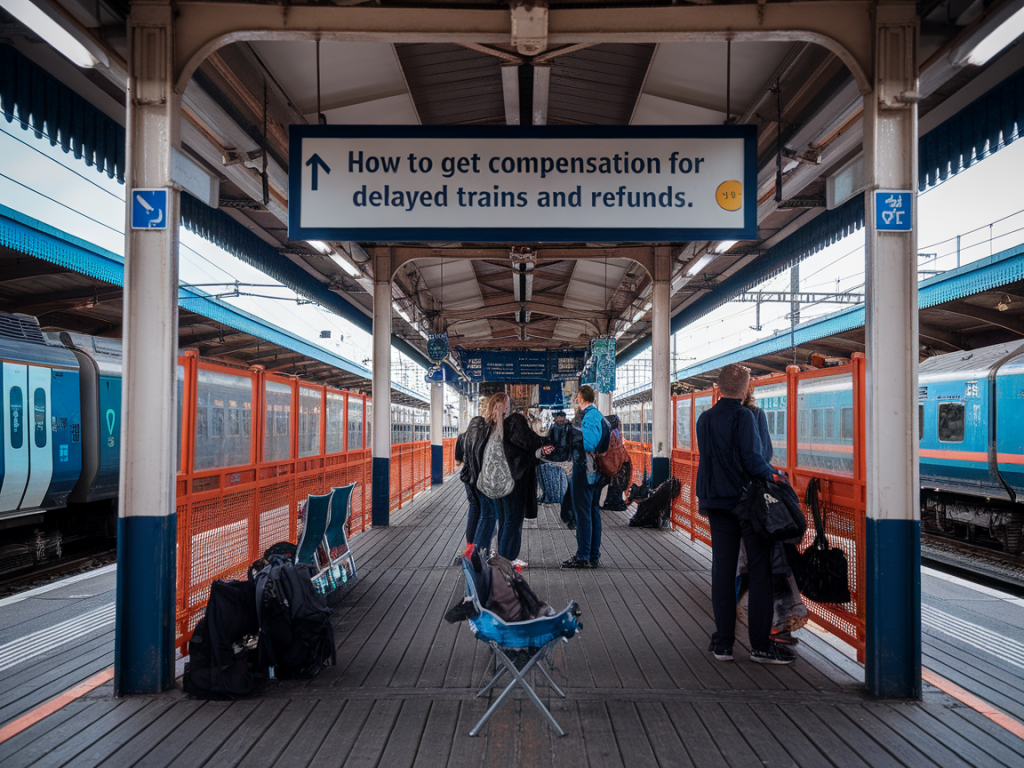
How to get compensation: droits et remboursements en cas de retard train

How to get compensation: droits et remboursements en cas de retard train

I’ve missed trains, waited on cold platforms, and once watched a perfectly timed market sunrise dissolve under the cloud of a long delay. Over the years I’ve learned to treat train delays not just as annoyances but as events that come with rights — and reimbursement options you can actually claim. If you’re reading this, you want clear, practical steps about droits et remboursements en cas de retard train and how to recover time, money or at least a bit of calm. Here’s what I do and recommend whenever I’m facing a delayed or cancelled train.

Before anything else, if you want a detailed official-oriented resource, see this guide on droits et remboursements en cas de retard train — it helped me frame the practical steps below when I had to file a claim last year.

Your basic rights when a train is delayed or cancelled

Two frameworks matter most: EU passenger rights (Regulation 1371/2007) for journeys that start or end in the EU, and the specific policies of the carrier — in France that’s often SNCF (TGV, Intercités, TER, Ouigo, etc.). In practice this means:

  • You may be entitled to reimbursement (partial or full) of your ticket if the delay is significant or your trip is cancelled.
  • You can ask for re-routing or a seat on the next available service under similar conditions.
  • For long delays, you might be entitled to assistance — meals or accommodation when an overnight stay becomes necessary.
  • Even if you accept a voucher instead of cash, you have the right to request a refund in money in many cases.
  • I always keep both these layers in mind: what the regulation guarantees, and what the carrier’s specific offers are for that train type.

    Typical compensation thresholds — what to expect

    Compensation depends on the type of train and the length of the delay at your final destination. These are common thresholds I use as a rule of thumb (always check the carrier’s page if you want the exact current percentages):

    Journey type Typical delay triggering compensation Typical compensation
    Long-distance (TGV, Intercités, international) Delay at arrival: ≥60 min Partial refund (often 25% for ~60–119 min, 50% for ≥120 min)
    Regional/commuter (TER, Transilien) Delay at arrival: often ≥30 min Often partial refund or voucher depending on carrier policy
    Cancellation / major disruption Any cancelled trip or significant rerouting Full refund of unused ticket or re-routing; assistance if necessary

    These percentages and thresholds reflect standard practice across many European operators. If you want to be precise for a specific train, look up the carrier’s compensation charter — SNCF publishes one for each product (TGV, TER, OUIGO etc.).

    How I file a claim — step-by-step

    When a delay affects me now, I follow these steps to avoid losing time or paperwork:

  • Keep the ticket and any receipts. Whether paper or digital, don’t delete the booking confirmation, PNR, or transaction email.
  • Document the delay. Take a photo of the station screen with the time, or the message shown in the app. I also note arrival time at my destination.
  • Check the carrier app or website immediately. Many operators (SNCF Connect, Ouigo app) let you request compensation in-app — that’s the fastest route for many people.
  • Choose the remedy you prefer: refund, voucher, or re-booking. If a money refund is important to you, select it explicitly and keep copies of confirmation messages.
  • Submit the claim online or at a staffed desk. I prefer online for speed, but if the station is busy I’ll get a stamped form from a desk agent to have a paper trail.
  • Save the claim reference and set a calendar reminder for follow-up if you don’t hear back in the stated timeframe.
  • What documents you’ll need

    Prepare these before you file to speed things up:

  • Ticket (PDF, mobile ticket screenshot, or paper ticket)
  • Booking reference / PNR
  • Proof of delay (screenshot/photo of departure/arrival boards or official notices)
  • Receipts for any out-of-pocket expenses (meals, hotels) if you’re claiming assistance
  • When you should accept vouchers — and when to refuse

    Carriers often offer instant vouchers (credit for future travel) as a quick solution. I accept them when I know I’ll use the same operator again soon — they’re convenient and fast. I refuse if I prefer cash back or need the money, or if the voucher expires rapidly. Importantly, you have the right to ask for a cash refund instead of a voucher in many cases — make that preference clear when you file.

    If your claim is denied or ignored

    Two things have worked well for me when claims stall:

  • Escalate to customer service via the operator’s official complaint form and attach all evidence. Be concise and provide a clear remedy request.
  • If there’s no satisfactory answer, use the national rail passenger ombudsman or the European Passenger Rights channels. In France you can contact Médiateur SNCF or the national transport regulator. Keep a copy of all correspondence — it’s useful if you escalate further.
  • Special situations I’ve encountered

    Strikes, disruptions due to extreme weather, or cross-border complications can complicate things. Here’s how I handle them:

  • For strikes: claims are usually valid if the operator cancelled or significantly changed your train. If the operator argues force majeure, ask for written explanation and consult the carrier’s charter.
  • For cross-border journeys: EU regulation typically applies. If part of the trip is outside the EU, check the operator rules for that leg.
  • For connecting trains: compensation is usually based on your final arrival delay — keep proof of missed connections and all tickets.
  • Practical tips from the platform

  • Take photos of announcements and keep timestamps.
  • If you must buy last-minute tickets to reach your destination because a train is cancelled, keep receipts — you may be reimbursed.
  • Use the operator’s app — it will often push notifications, alternative offers, and a direct compensation form.
  • Keep expectations realistic: claims take time. I usually allow a few weeks before following up, but I file claims as soon as possible after the journey.
  • Travel is full of small unknowns; delays are one of them. Knowing your rights and the practical steps to claim reimbursement turns frustration into something manageable — and it leaves more space for the next alleyway, market stall, or rooftop I want to explore.


    You should also check the following news:

    Travel Tips

    Where to buy authentic spices in Marrakech's new markets and how to pack them for flights and customs

    11/04/2026

    I roam markets the way other people collect postcards: by aroma. In Marrakech, the spice scene is as much about the stalls and the vendors’ stories...

    Read more...
    Where to buy authentic spices in Marrakech's new markets and how to pack them for flights and customs