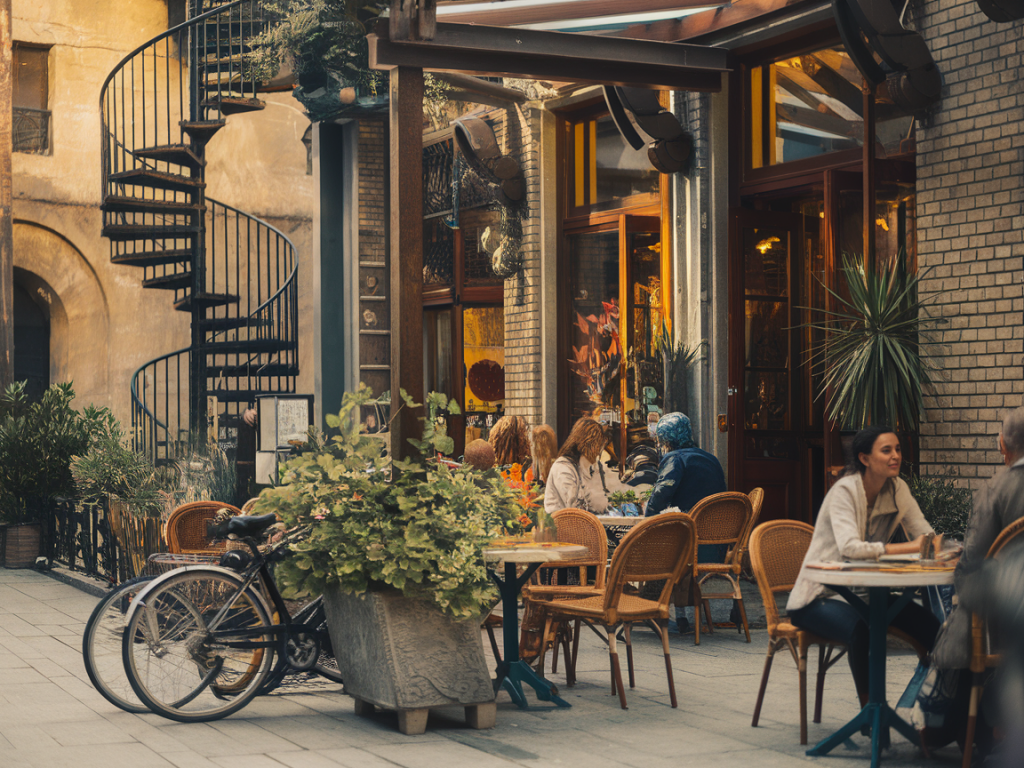
I have a soft spot for terrace cafés that hide behind wrought-iron gates, courtyard doors or along sleepy side streets in Buenos Aires. They are the kind of places where locals drink their first coffee of the day, newspapers still warm with ink, and where the city’s texture — cracked tiles, potted geraniums, a radio playing tango or indie rock — reveals itself slowly. Finding and photographing these spots before the tourist crowds arrive is one of my favorite city rituals. Here’s how I do it, from planning to exposure settings, with the small practical details that make early-morning café scouting in Buenos Aires both productive and delightful.
Research like a local
I start online, but not with the usual top-10 lists. My go-to sources are neighborhood Instagram accounts, local food blogs, and community posts on Facebook groups where porteños share new openings and hidden courtyards. Useful apps and sites: BA Cómo Llego for transit, Google Maps for satellite views (look for interior patios and terraces), and Instagram location tags — search “patio,” “terraza,” “café de barrio” and specific barrios like Palermo Viejo, Colegiales, Almagro or San Telmo.
I also keep an eye on Buenos Aires food guides such as Zomato and local review sections in Clarín or La Nación for names that don’t show up on international lists. Word-of-mouth matters: when I find a café I like, I ask the staff where they go for a morning coffee. That network effect is how I’ve found courtyards behind florists or upstairs terraces above hardware stores.
Best times to arrive
To capture a quiet terrace with flattering light and minimal humans in the frame, timing is everything.
- Weekdays: Arrive between 7:00 and 9:00 a.m. Most locals stop by for a quick café con leche before work, but crowds haven’t formed yet.
- Weekends: Start earlier — I aim for 6:30–8:00 a.m. Many porteños brunch later, so the early hours are peaceful and golden.
- Golden hour: In summer, that can be as early as 6:00 a.m.; in winter, closer to 7:30. On a terrace that faces east, arrive before sunrise for backlit steam and shadow play.
How to get there: transport tips
Buenos Aires is compact but notoriously traffic-prone. I avoid taxis during the morning commute and prefer:
- Subte (metro) — Lines D, B and C connect leafy neighborhoods; get a SUBE card at kiosks.
- Colectivos — Bus routes reach pockets the subte misses. Ask locals which line to take; drivers usually know the stop names.
- Walking — Once I’m in a neighborhood like San Telmo or La Boca, I adopt a slow, camera-in-hand pace and follow side streets looking for light on terraces.
Approach and etiquette
One reason these terraces stay quiet early is that locals value privacy. I treat every courtyard like a small stage: enter softly, ask permission if you want to photograph people up-close, and buy something — even a simple medialuna or café con leche — before setting up a tripod or taking more than a few frames.
- Say hello in Spanish: a simple “buenos días” opens doors.
- If a terrace is behind a gate or a door, knock or ring — many owners and staff appreciate owners being asked rather than photographed by stealth.
- Limit intrusive lighting: prefer natural light. Avoid using flash on people without consent.
What I carry in my bag
I travel light — a compact mirrorless camera (I shoot with a small Sony A7 or Fujifilm X-series clone), two lenses, one small tripod and a few practical extras:
- Prime lens 35mm or 23mm for environmental portraits and terrace-wide shots.
- 50mm fast prime for shallow depth-of-field shots of coffee cups and hands.
- Small travel tripod (GorillaPod or a compact carbon fiber tripod) for long exposures during blue hour or for shooting interior low-light corners.
- Neutral grey ND filter — useful if you want to shoot a terrace in strong daylight with wider apertures.
- Extra battery and a spare 64–128 GB SD card.
- Portable espresso wallet: a small cash clip (many neighborhood cafés are cash-friendly) and a reusable cup if you want to minimize waste.
Photographic approach: light, composition and camera settings
When the terrace is quiet, I shoot for texture and narrative: steaming cups, patterned tiles, the way light hits potted plants. Here are the rules I most often use:
- Light: Look for side-lighting at golden hour to reveal texture — wet cobblestones, peeling paint and woven chairs. Backlighting at sunrise can capture steam from a cup as a soft halo.
- Composition: Include human elements even if people aren’t the subjects — a hand reaching for a croissant, a jacket over a chair, newspapers on a bench. These give scale and story.
- Settings: Shoot RAW. For lighter scenes use ISO 100–400, aperture f/2–f/5.6 for subject isolation or f/8–f/11 when I want detail across tiles and tables. If it’s dim, don’t be afraid to boost ISO up to 1600 on modern mirrorless bodies; noise is manageable in post.
- Exposure: Watch highlights — white cups and tiles can blow out. I underexpose by 1/3 to 2/3 stops if the scene has strong backlight, and recover in RAW.
- White balance: I often set Auto WB and adjust in Lightroom; for consistent morning tones, set around 5200K but tweak to taste.
Story-driven shots to capture
I aim for a set of images that together tell the café’s story:
- Establishing shot — the terrace from the street or courtyard doorway.
- Detail shots — a steaming cup, sugar packet, tile pattern, chair weaving.
- Human ritual — a barista tamping espresso, a local reading a paper, hands exchanging change.
- Context — the block, nearby shopfronts, signs or balconies that place the terrace in a neighborhood.
- Atmospheric frames — early morning light, empty chairs, shadows over tables.
Safety, permissions and usage
Buenos Aires is generally safe in central barrios early in the morning, but I avoid showing expensive gear unattended and keep my camera strap across my body. If I plan to use images commercially (for a client or stock), I ask permission and, if needed, get a simple model release from identifiable people. For Acidadventure posts, I credit the café and link to their page when possible — small businesses appreciate the exposure.
Sample morning itinerary
| Time | Plan |
|---|---|
| 6:30–7:00 | Arrive, walk the block, scout light and angle. Buy a small coffee to secure a table. |
| 7:00–8:00 | Shoot wide and detail frames. Ask the barista about the terrace’s history — those quotes are great captions. |
| 8:00–9:00 | Move to neighboring street for context shots, then head to another hidden courtyard in the same barrio. |
Photographing hidden terrace cafés in Buenos Aires is equal parts planning and serendipity. The research and early wake-ups are worth it when you find a courtyard that feels untouched by guidebooks — that blue tile, a battered wooden chair, the steam from a cup glowing in the morning sun. Keep your approach respectful, your kit light, and your curiosity open. If you’re planning a visit and want a neighborhood walking route that pairs cafés and photo spots, drop me a note through the contact page at Acidadventure — I love crafting custom photo-led walks for curious travelers.