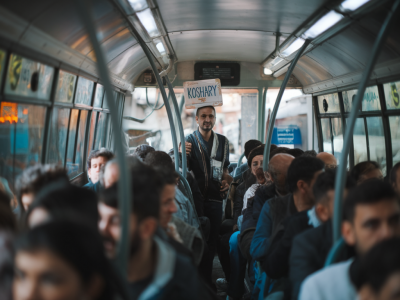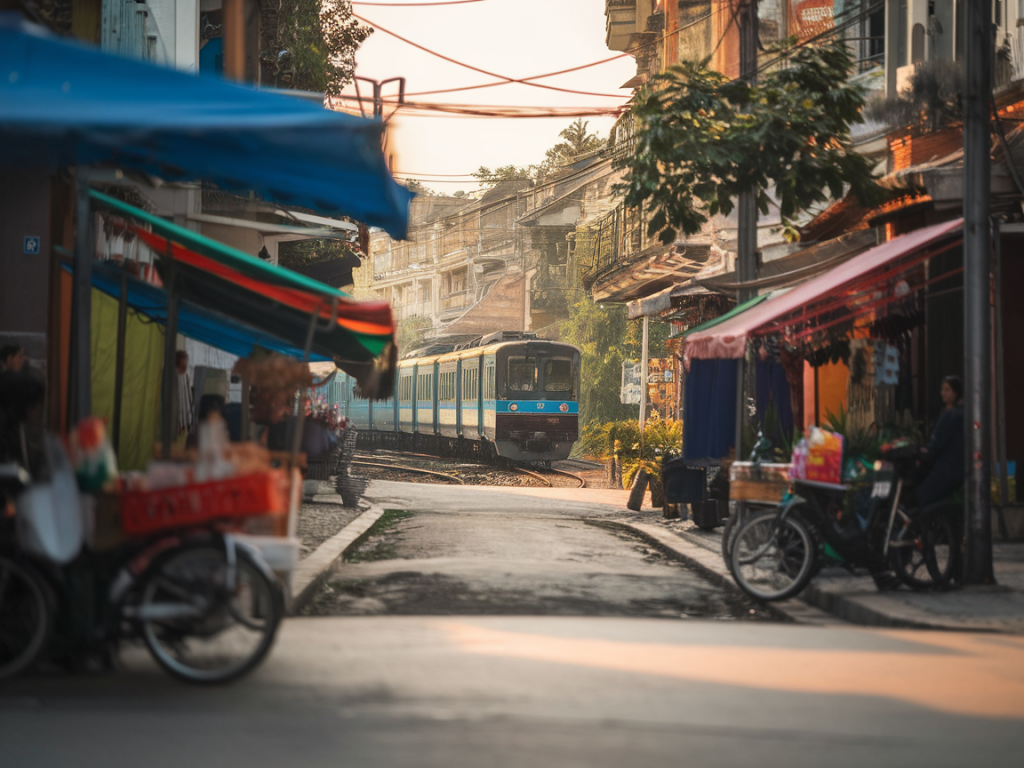
I rise before the city wakes—sometimes that’s the best way to meet Hanoi. There’s a particular stillness in the Old Quarter at first light, when shop shutters are half-open, street vendors set up for the day, and the famous train tracks thread through a neighborhood that has lived on the edge of schedules and spectacle for generations. I put together this 90-minute walking route to help you capture portraits of stall-keepers, candid frames on Train Street, and the quiet textures that make Hanoi feel lived-in rather than staged.
Why shoot Hanoi’s Old Quarter at first light?
Early morning gives you two gifts: soft light and slower pace. The harsh midday sun flattens faces and bleaches color; by contrast, first light sculpts the faces of stall owners, picks out steam rising from a bowl of phở, and adds a cool warmth to the brick and lacquered wood of the old houses. There are fewer tourists and more space to compose calmly. The trains still run on schedule—catching them passing through a waking neighborhood is a highlight—but before the streets swell is the best time for authentic portraits and atmospheric street scenes.
What to bring (compact and discreet)
I travel light for this walk: a compact mirrorless camera, a 35mm or 50mm prime, and a small 70–200mm equivalent if you like compressed portraits from a distance. A 24–70mm zoom is fine too, but primes help you think in frames.
- Camera: compact mirrorless (Sony A7/C, Fujifilm X-S10, Canon R100—whatever you have).
- Lenses: 35mm or 50mm prime for street portraits, optional 85mm or 70–200mm for candid compression.
- Accessories: spare battery, 64GB card, small microfiber cloth, lightweight neck strap.
- Clothing: neutral layers, comfortable shoes, a lightweight rain jacket in monsoon months.
- Respect tools: a small pack of business cards, a phrasebook app, and a polite smile—often enough to open doors.
Basic camera settings to start with
Street light changes quickly. I set my camera to aperture priority and let ISO be automatic within a ceiling (ISO 3200 max on modern sensors). For portraits, shoot wide (f/1.8–f/2.8) to blur the chaotic background; for documentary context shots include f/5.6–f/8 to hold several elements in focus.
| Scenario | Aperture | Shutter / Mode | ISO |
|---|---|---|---|
| Close portrait at first light | f/1.8–f/2.8 | Aperture priority, shutter auto | Auto up to 1600 |
| Street scene with train approaching | f/5.6 | 1/500s–1/1000s to freeze motion | Auto up to 3200 |
| Market stall detail (low light) | f/2.8–f/4 | 1/125s–1/250s | Auto to 3200 |
How to behave: politeness, permission and composition
Hanoi is warm and direct. A smile and a few Vietnamese phrases (xin chào, cảm ơn, một chút—“hello,” “thank you,” “a little”) go far. If you want a close portrait, ask. Usually a quick “Photo?” while pointing to your camera will suffice; if the person gestures yes, show them the image afterward—this creates a connection and often leads to better frames. If they say no, keep your distance and look for environmental portraits instead.
Avoid blocking stalls or standing in doorways. Don’t chase the train for dramatic frames; the tracks are narrow and locals use them whether a camera is around or not. Keep off the rails unless you’re in an obvious pedestrian spot and the train schedule is clear. Finally, offer a small token if you’ve taken many close shots—locals appreciate gestures more than large tips.
The 90-minute route (rough times, optimized for first light)
Start about 30 minutes before sunrise. I begin near Đồng Xuân Market and move east along the tracks, circling through narrow alleys and market pockets. Time markers are approximate and assume a steady photographer’s pace with stops to talk and frame.
- 0–10 minutes — Đồng Xuân Market entrance: Before the market opens fully, vendors pitch goods and steam rises from plastic buckets of noodles. Look for candid prep: hands arranging herbs, steam against signage. Shoot low angles to include rooftop silhouettes.
- 10–25 minutes — Train Street (Lương Ngọc Quyến / Phùng Hưng strip): This is the iconic stretch. Arrive early before cafes fully set chairs out. Use a longer focal length to compress faces against the track and the facades. Watch for laundry lines and neon signs still glowing—they make pleasing bokeh.
- 25–40 minutes — Narrow alley detour (Hẻm off Hàng Bạc): Drop into a side alley where elderly vendors roll out small tables for congee and coffee. Here, I slow down and move to eye level for intimate portraits. Use a prime at f/2 to separate subjects from clutter.
- 40–60 minutes — Stall-lined lane near Hàng Bài: Return toward busier lanes for mid-morning rhythm: bicycle vendors, tea cups in hand, and mothers prepping breakfast. Capture interactions—someone handing over money, a child leaning on a crate. Keep shutter speed high enough to freeze small gestures.
- 60–75 minutes — Riverside glimpse toward Trấn Vũ: Cross toward the edge of the neighborhood to include the Red River light and fishermen prepping nets. These contextual shots balance your intimate portraits with place-based scenes.
- 75–90 minutes — Back through Train Street cafes as light softens: Return to the tracks for train passages as more people arrive. This is often when portraits have more relaxed expressions because vendors are engaged in conversation or routine. Look for reflective puddles, neon reflections, and the cadence of daily life.
Compositional tips for portraits and train-street scenes
- Frame people with architectural elements—doorframes, shutters, and awnings help tell a neighborhood story.
- Use leading lines of the tracks to draw the eye to a subject; a shallow depth of field isolates faces against the repeating rails.
- Include hands. Vietnamese street portraits are often more revealing when hands are visible—handling chopsticks, counting bills, or gesturing while chatting.
- Watch for reflected light—metal trays and wet cobbles make compelling catchlights in low sun.
- When a train comes, switch to a faster shutter and anticipate—not chase—the movement. A moment before and after passage yields different moods.
Ethics and storytelling
A good portrait respects dignity. I aim to photograph people doing what they do, not posing them into clichés. If someone is dignified, let the frame be dignified too. If a scene feels performative, step back and wait for a genuine moment. Share back if you can—the small act of handing over a printed postcard or sending a file later strengthens the human exchange that good street photography depends on.
When things don’t go as planned
Sometimes trains change schedules, weather rolls in, or vendors close early. Treat the route as a flexible skeleton. If rain starts, look for covered doorways and neon reflections; umbrellas can add rhythm and color. If a shopkeeper won’t be photographed, focus on hands, tools, or the stall’s textures. The Old Quarter gives you fragments—collect and edit them into a story rather than forcing a single shot.
If you want a follow-up, I can share a Lightroom preset I use for early-morning Hanoi tones: a muted warmth on highlights, boosted midtone contrast, and a touch of grain to keep the images gritty and tactile. Send me a note on the contact page at Acidadventure if you'd like that preset or a tailored 60-minute photo walk plan in Hanoi.