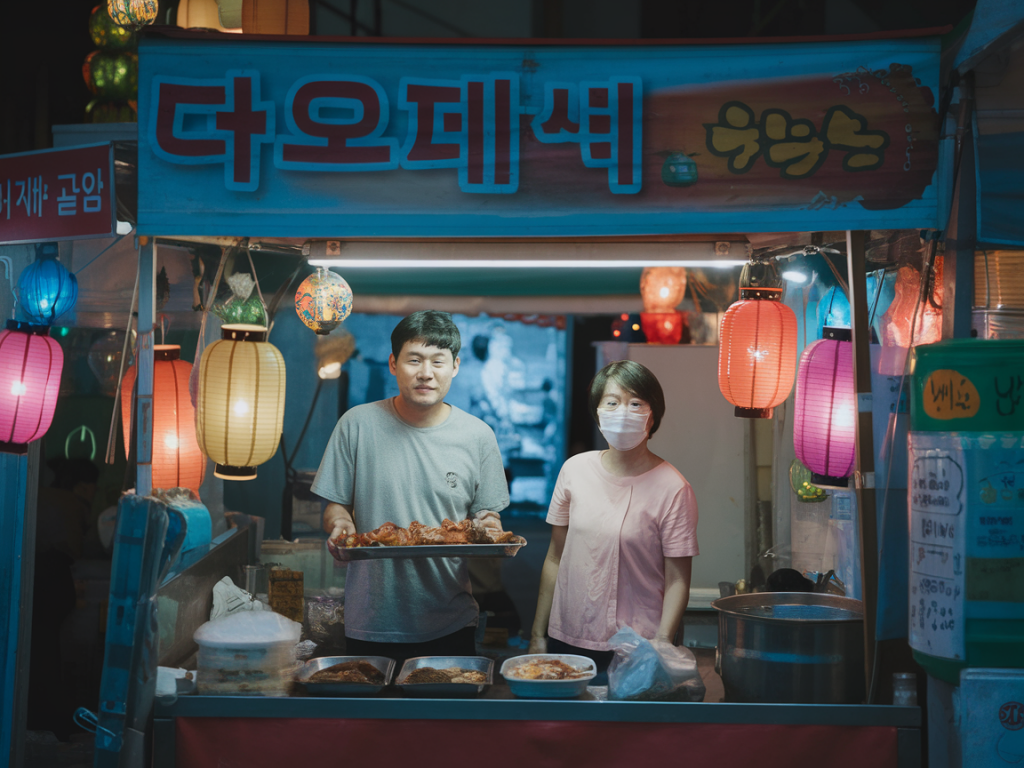
On my first night in Seoul I wandered past a street corner where steam curled out from under a plastic tarp and an impromptu community huddled around plastic stools. The lights were low, the air smelled of soy and frying oil, and laughter rose above the hum of traffic. Those were my first pojangmacha tents — the small, often portable street-food stalls that define Seoul’s late-night scene. Since then I’ve chased them across neighborhoods, camera in hand, learning which dishes to order, how to behave, and how to capture honest photos without breaking the flow of an intimate, communal meal.
What a pojangmacha is — and why it matters
Pojangmacha (포장마차) literally means “covered wagon,” but today it refers to small tents or carts where people eat, drink soju, and unwind. These tents are more than food stalls; they’re social microcosms. You’ll find salarymen, night-shift workers, couples, and groups of friends squeezing together like an extended living room. Respecting that shared atmosphere is key if you want a safe, photogenic experience.
What to order — dishes that matter
Over many nights I found that a successful pojangmacha crawl balances comforting classics and small, showy plates that are easy to share. Here’s what I usually order, and why it works:
- Tteokbokki (떡볶이) — Chewy rice cakes in a spicy, slightly sweet red sauce. A comforting starter that’s great for photographing because the glossy sauce catches light beautifully.
- Odeng / Eomuk (오뎅/어묵) — Fish cake skewers served in a light broth. Sip the broth from the cup and keep your camera dry; it’s humble but absolutely essential.
- Pajeon (파전) — Savory pancake, often with green onions or seafood. Tear into it and dip in soy-vinegar; the crisp edges look lovely in closeups.
- Soju — The default drink of late-night tents. I prefer flavoured varieties for beginners (yogurt, grapefruit), but classic soju pairs seamlessly with rich, fried dishes.
- Tongdak / Fried Chicken pieces — Bite-sized, crispy pieces ideal for sharing. They photograph well under neon — capture a piece mid-lift for action.
- Sundubu-jjigae (순두부찌개) — Silky soft tofu stew served bubbling hot in a stone pot. Be careful when photographing: steam is atmospheric but can fog lenses.
- Mandu (만두) — Dumplings, steamed or fried. Great for texture shots and easy to eat while standing if the tent is full.
If I’m with a small group, I order a few small plates to share plus one hearty stew. That keeps things varied and gives me the chance to try everything without wasting food.
How to order — practical phrases and payment
Language skills aren’t mandatory, but a few phrases go a long way. I always say hello and thank you in Korean; it opens smiles.
- Annyeonghaseyo (안녕하세요) — Hello
- Juseyo (주세요) — Please give me / I’ll have
- Gamsahamnida (감사합니다) — Thank you
- Han beon juseyo (한 번 주세요) — One order please
Most tents accept cash; some accept cards or QR payments, but don’t rely on card machines being available. I carry small bills and coins — it’s easier and faster. When a server sets down a dish, pointing and saying the dish name or lifting your chopsticks is polite and efficient.
How to behave — etiquette for a smooth night
Respect the communal vibe. Here are the things I’ve learned the hard way and now always follow:
- Wait to be seated — Even if there are empty stools, it’s polite to ask. I usually make eye contact and nod toward a seat, or say “Is this seat free?” (yeogi gakka-yo? / 여기가요?).
- Keep your voice moderate — Tents are lively, but loud phone calls or shouting break the atmosphere.
- Share plates — Dishes are communal. Use serving chopsticks if available, or the back ends of your chopsticks to grab shared food.
- Pour for others — If you’re drinking soju, pour for the group rather than for yourself. It’s a small gesture that’s always appreciated.
- Don’t hog power sockets or table space — Pojangmacha are compact; keep bags and gear close and out of the walkways.
- Dispose of trash or follow the vendor’s system — Many tents ask you to leave plates on the table; others have a bin. Watch what locals do and follow along.
Photography tips — getting great, respectful shots
I shoot with a compact mirrorless camera and a 35mm-equivalent prime — light, fast, and unobtrusive. Here’s my workflow for photogenic, respectful images:
- Ask before photographing people — A quick “Photo jwo-hey-do 될까요?” (Can I take a photo?) or a smile goes a long way. Often people will nod or even pose, but accept a no gracefully.
- Use available light — Neon, lamps, and boiling steam create beautiful highlights. I lift ISO rather than use flash; flash is harsh and intrusive in a close-knit tent.
- Capture hands and food — Close-ups of hands reaching for tteokbokki or a dripping sauce tell more than formal portraits.
- Be mindful of timing — Avoid shooting during intimate moments (serious conversations, eating in silence). Instead, photograph the beginning of a meal, the cooking, or the laughter afterward.
- Keep equipment minimal — A small camera, a lens cloth, and a compact flash drive or phone backup is all I bring. Bulky tripods are impractical and attract attention.
Safety and health tips
Pojangmacha are generally safe, but take normal precautions:
- Watch hot dishes and bubbling stews — the stone pots can scald.
- Stick to busy tents — turnover implies freshness.
- Use hand sanitizer before eating if there’s no sink nearby.
- If you have allergies, say them clearly in Korean or show a note on your phone — “I am allergic to shellfish” (haesorae allergi-ga-isseoyo / 해산물 알레르기 있어요).
Quick menu reference
| Dish | Description | Typical price |
| Tteokbokki | Chewy rice cakes in spicy-sweet sauce | $3–6 |
| Odeng / Eomuk | Fish cake skewers in dashi-like broth | $1–3 per skewer or $3–5 bowl |
| Pajeon | Savory pancake, often green onion or seafood | $6–12 |
| Soju | Clear rice spirit, often shared | $3–8 per bottle or shot |
| Sundubu-jjigae | Silky tofu stew, served very hot | $7–12 |
Every pojangmacha tells a story. For me, the best nights were when a stranger slid their plate over, insisting I try their snack, or when the tent owner told a neighborhood legend between ladlefuls. If you go with curiosity, a modest budget, and a light camera, you’ll come away with more than a full belly — you’ll leave with a quiet, vivid snapshot of Seoul’s nocturnal life.