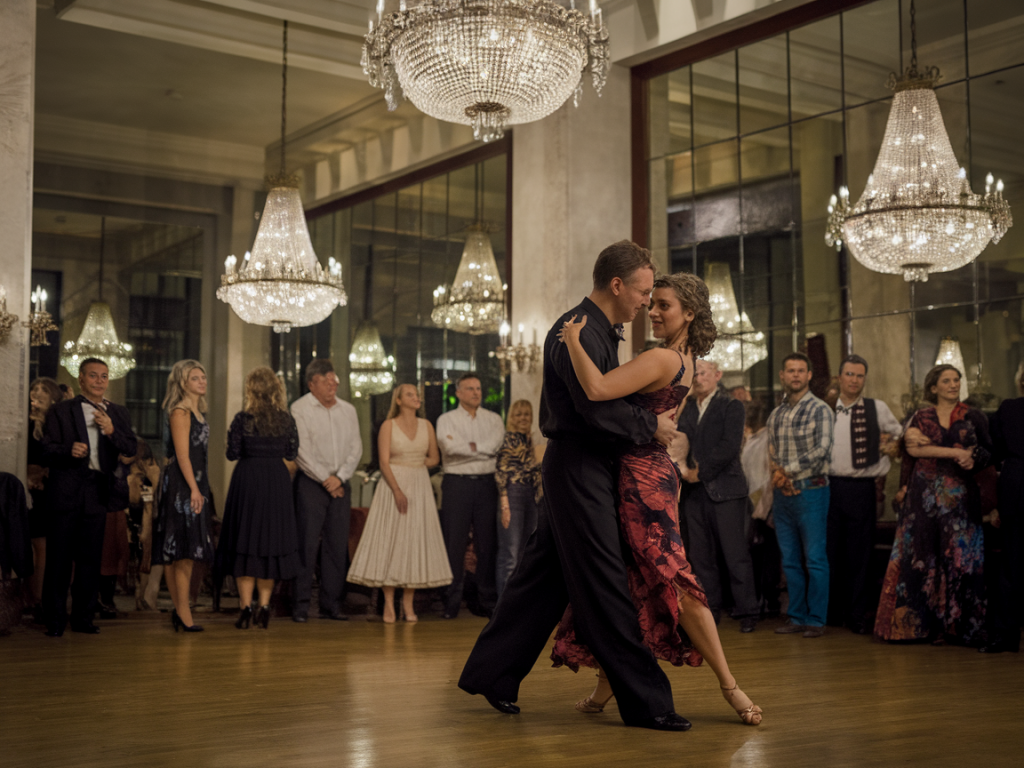
I remember the first time I slipped into a milonga in Buenos Aires: the air thick with cigarette smoke and perfume, a hush falling as a tanda began, shoes scuffing the polished floor in intimate conversation. I was there to photograph, but quickly learned that a milonga is less a show and more a social contract. If you want images that matter—and to leave the night with warm memories rather than awkward apologies—there are rules to follow, both practical and unspoken. Here’s how I approach joining and photographing a milonga as a respectful outsider.
Before you go: research and mindset
Not all milongas are the same. Some are tourist-friendly and have mixed crowds (La Catedral, Salon Canning, and Confitería Ideal are names people often mention), while others are more local and strict about etiquette. Do a little homework: read recent reviews, check event pages, and see if any photographers were present. But the most important bit is your mindset—arrive humble, curious, and ready to adapt. A milonga is a communal space built on mutual respect; your camera should never feel like a wedge between people.
What to bring (and what to leave at home)
- Camera: a compact mirrorless or a small DSLR. I prefer a lightweight mirrorless for milongas—Fujifilm X-series or Sony A7 with a small prime make it easier to stay unobtrusive.
- Lenses: a 35mm or 50mm prime is my go-to for close, atmospheric shots that feel intimate without being invasive. A 24-70mm zoom offers flexibility if you’re covering from the edge of the floor.
- No flash: never use on-camera flash. It breaks the mood and blinds dancers. If you need more light, raise ISO, open the aperture, and shoot in RAW.
- Minimal kit: leave the tripod, big rigs, and loud gear at your guesthouse. You’ll stand out—and often be asked to leave.
- Cash: many milongas charge a door fee (entrada) and some expect a small contribution for snacks or coat check. Cash is still king.
How to join the milonga
Arrive before the dance floor fills. There’s a flow to milonga evenings: a práctica or warm-up session, then tandas (sets) punctuated by cortinas (short musical breaks). Watch how locals position themselves. People generally sit facing the floor, and there’s a protocolo called the cabeceo—eye contact and a nod—to request a dance. If you’re invited, accept graciously; if not, don’t take it personally.
If you’re new to tango steps, you can still join the social aspects: enjoy cortinas, watch tandas, mingle during the break. Practicas are more tolerant for dancers experimenting; milongas are where the social rules tighten.
Etiquette for photographing
- Ask permission: Before taking close-up portraits of a couple on the floor, step to the side and ask. A quick “¿Puedo sacar fotos?” or “May I photograph you?” is usually enough. If language barriers exist, a polite gesture and a smile go a long way.
- Be unobtrusive: Keep to the edges. Photographers who crop the floor or move between dancers disrupt the circle. I pick a seat with a clear view and stand only between tandas or when invited to shoot from the edge.
- No flash, no tripod: Flash is disrespectful; tripods take up space and create safety hazards on a crowded floor.
- Respect the tanda: During a tanda, refrain from asking couples to reshoot or reposition. Wait for the cortina or a break to chat.
- Gratitude and reciprocity: If someone lets you photograph them, offer a print (digital or small) later or send a few high-res shots by email. I often exchange contact details and deliver images the next day—people appreciate it.
Camera settings and low-light tips
Milongas are candlelit, neon, or under warm bulbs—beautiful, but challenging. My baseline settings:
| Aperture | f/1.8–f/2.8 (wide to let light in and create shallow depth) |
| Shutter speed | 1/125–1/250s for dancers in motion; faster if you want to freeze dramatic legwork |
| ISO | Start 1600–3200 on modern mirrorless; push higher if needed, RAW helps recover noise |
| Focus | Continuous AF with a single point or small zone aimed at the dancers’ torsos |
Using a fast prime lets you keep a lower ISO and retain mood. I often underexpose slightly to preserve highlights and recover shadow details in post—this keeps the ambiance of low, warm light.
Compositional approaches that work in a milonga
- Details first: hands, feet, expressions. These snippets tell more about connection than wide shots.
- Sequence the movement: capture the approach, embrace, and the release across a tanda. It creates a story when edited together.
- Use silhouettes and backlight: when light hits from behind, silhouettes can speak louder than faces.
- Include the room: shots that show the audience, the line of chairs, and the bar ground the dance in place and culture.
When to engage and how to ask
After a tanda or during a break, approach gently. Compliment the dancing before asking to take a few portraits. Simple phrases in Spanish earn respect: “Bailaron muy bien—¿Puedo sacarles una foto?” If a couple declines, smile and move on. If they agree, be quick and efficient—don’t monopolize their time in a place where people rotate.
Editing, delivery and privacy
Process with care. I keep edits natural—lift shadows, tame highlights, and keep skin tones warm. Always respect requests to remove photos. Many dancers will want copies: ask how they'd like to receive them (WhatsApp is common in Argentina). Tagging on social media is okay only with permission; some prefer anonymity. If you plan to publish on Acidadventure or elsewhere, ask for explicit permission and clarify how the images will be used.
What to avoid
- Don’t interrupt a tanda for a photo op.
- Don’t photograph minors without consent from guardians.
- Don’t monopolize a couple’s time or finger-point while judging technique.
- Don’t approach someone in the middle of the dance floor unless invited.
Photographing a milonga is an exercise in restraint: you’re there to witness and translate a social ritual, not to dominate it. Treat each image as a collaboration—capture the intimacy, return the favor with courtesy, and you’ll leave richer images and warmer memories. If you’re planning a Buenos Aires trip and want a custom photography walk that includes a milonga visit, I sometimes arrange itineraries that pair a gentle tango primer with shooting tips—drop me a line through the Acidadventure contact page on https://www.acidadventure.com.