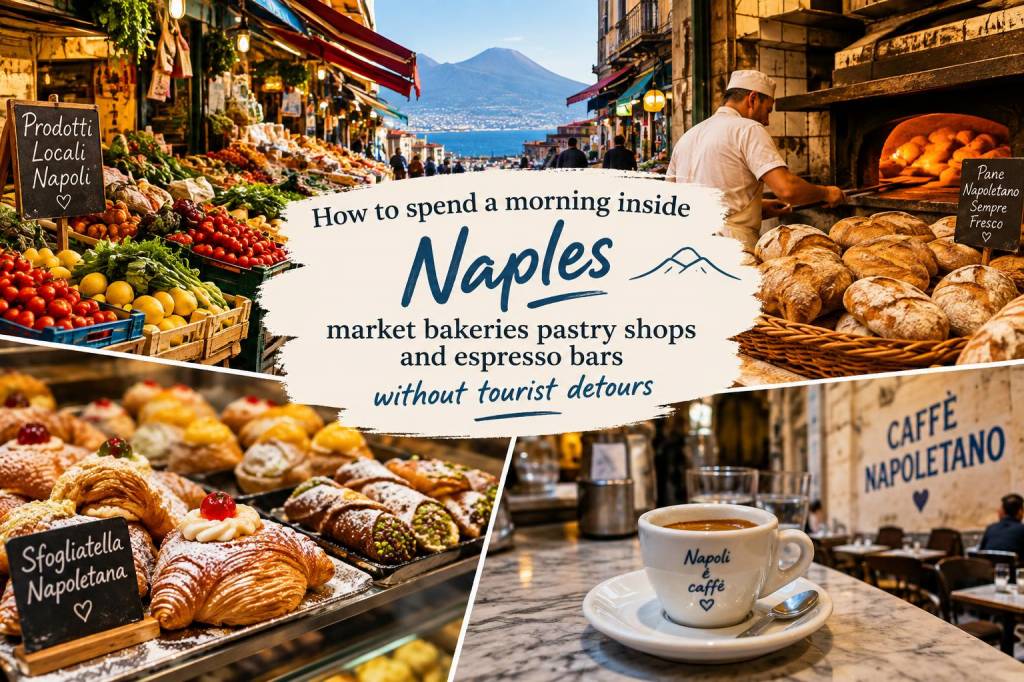
I like starting in Naples before most visitors have fully opened their eyes. Morning is when the city feels most itself: shutters half raised, delivery scooters threading through narrow streets, bakers pulling trays from hot ovens, and espresso bars filling with people who know exactly what they want and do not need a menu to decide. If I have only one slow morning in the city, I spend it moving between market bakeries, pastry shops, and standing-room-only coffee counters, following the smell of yeast, sugar, and strong coffee rather than any sightseeing list.
What makes this kind of morning so rewarding is that it is not built around landmarks. It is built around routine. Naples reveals a different side of itself when you follow residents on their daily errands: buying breakfast bread, picking up pastries for the family, and taking coffee in a quick ritual that still feels almost ceremonial. I always find that skipping tourist detours leaves more room for real texture, real conversation, and real flavor.
Where I begin when I want a local morning
I usually begin near a neighborhood market rather than on a grand boulevard. Markets in Naples are not always polished or neatly arranged, and that is part of their charm. Stalls may spill onto the pavement, produce boxes may be stacked in uneven rows, and the smell of fresh bread can drift in from several streets away. I look for bakeries near market edges because they often serve a mix of shoppers, workers, and older regulars who come for the same loaf or pastry every day.
In these areas, I like to watch the rhythm before I order anything. Which counter is moving fastest? Which tray empties first? Which bread goes into paper bags for customers who seem to know exactly what they are buying? Naples teaches patience and attentiveness. The morning reward is rarely instant, but it is always worth waiting for.
If you want a calm start, arrive early, before the crowd thickens. Between 7:30 and 9:00 a.m. is usually my favorite window. That is when pastries still feel warm, coffee is flowing quickly, and the energy is lively without becoming chaotic. Later in the morning, the same places can get busier and more frantic, especially near transit hubs and central shopping streets.
What I order in bakery counters
Naples has a deep baking culture, and I never limit myself to sweet pastries alone. I like to ask what came out first that morning and what the baker is most proud of. Some places specialize in rustic breads, while others lean into pastries filled with cream, ricotta, citrus, or chocolate. A good bakery stop often gives me a small breakfast and a sense of the neighborhood in one visit.
When I am deciding, I look for a few things:
- Freshly baked bread, especially if I plan to walk for a while and want something simple to carry.
- Filled pastries with ricotta, custard, or fruit, which often tell me more about local taste than anything highly decorated.
- Savory snacks such as stuffed dough or baked pies, which make a better second breakfast than many travelers expect.
- Small portions, because I prefer sampling several places rather than filling up at one stop.
I have learned not to ask for too much advice from visitors’ lists or glossy bakery rankings. In Naples, the most memorable items are often the ones a clerk recommends in passing, especially when they say something like, “That one is still warm.”
Why pastry shops are worth a slower stop
Pastry shops in Naples are where breakfast turns from practical to indulgent. These places can feel elegant without being stiff, and I love that mix. There is usually a glass case full of glossy, detailed desserts, but I try not to focus only on appearance. I ask what sells quickly, what is made daily, and what locals buy for home rather than for display.
One reason I linger in pastry shops is that they often reveal the city’s balance between restraint and pleasure. A pastry may look elaborate, yet the flavor is usually direct and clear. Citrus, cream, almond, chocolate, and pastry dough often do most of the work. I find that the best shop visits are not about eating as much as possible. They are about understanding what Naples values in a sweet breakfast: freshness, richness, and no wasted effort.
If I am sitting instead of standing, I watch how other customers order. Some take one pastry and leave within minutes. Others buy a box for family, office, or neighbors. That movement tells me a lot about the shop’s role in daily life. A pastry shop that feels like a neighborhood habit, not a performance for outsiders, is usually the one I trust most.
Espresso bars and the rhythm of a short pause
After a bakery stop, I always move to coffee. In Naples, espresso is not a side note. It is a small, sharp pause that gives shape to the morning. I prefer bars where people stand shoulder to shoulder at the counter, take a quick sip, exchange a few words, and leave. That pace may feel rushed to some travelers, but I find it beautiful. It respects time without wasting it.
When I order, I keep it simple. I watch the flow, pay attention to the cups, and notice whether regulars are greeted by name. A good espresso bar does not need to impress with design or large menus. I am looking for precision: a clean shot, a proper cup, a strong aroma, and a bartender who moves with confidence. If I want a second coffee, I usually wait a little while after the first. In Naples, coffee works best when it is treated as a series of small moments rather than a long sit-down event.
I also like to pair coffee with a pastry bought earlier, but only if I still have room. Sweetness and bitterness work especially well together in the morning, and Naples does this balance better than almost anywhere else I have visited. The city never asks me to choose between comfort and intensity. It gives me both.
What I avoid when I want no tourist detours
When I want a morning that feels grounded, I avoid places that seem designed mainly for passing visitors. That does not mean I reject famous addresses entirely, but I do choose carefully. I skip venues with overly polished displays, menus translated into too many languages, and staff who spend more time inviting people in than serving regulars. I also avoid streets where every storefront looks copied from the last one.
I look for signs that a place is part of neighborhood life:
- Locals standing in line without hesitation
- Simple seating, or no seating at all
- Handwritten labels or modest display cases
- Fast turnover of bread and pastries
- Staff who seem busy rather than theatrical
That said, I never confuse simplicity with quality. Some of my favorite Naples breakfasts come from shops that look almost plain from the outside. The real signal is not decoration. It is motion, scent, and repeat business.
A practical morning route I would actually take
If I had to shape a morning from scratch, I would keep it compact and walkable. I like short distances because they let me notice more: a butcher opening his door, a fruit stand unloading crates, a child in school uniform holding a warm snack, a barista calling out orders with practiced speed. Naples rewards this kind of drifting.
| Stop | What I look for | Why it works |
|---|---|---|
| Market bakery | Fresh bread, savory pastries, early bustle | Sets a local tone and gives a grounded start |
| Pastry shop | Daily sweets, neighborhood regulars, boxed orders | Adds a slower, richer stop with more variety |
| Espresso bar | Fast service, standing counter, clean coffee ritual | Finishes the morning with energy and rhythm |
I usually keep water in my bag, carry some cash, and leave space for an extra stop if something catches my eye. I never try to optimize this kind of morning. The pleasure comes from leaving a little room for surprise.
What I notice when I am eating slowly instead of rushing
The longer I stay in one neighborhood, the more the city speaks through small details. I notice which pastries are bought for takeout and which are eaten immediately. I notice how locals greet one another at the counter. I notice whether the bakery flour dusts the floor near the oven or whether the pastry case has a slight reflection from the street outside. These are tiny things, but together they create a stronger memory than any famous square ever could.
I also find that eating slowly changes my sense of distance. A street that felt overwhelming when I first arrived becomes familiar after a pastry, a coffee, and a few minutes of people-watching. That is one reason I love market mornings in Naples: they make the city feel navigable without turning it into a performance. I am not chasing a checklist. I am following appetite, curiosity, and habit.
By late morning, I usually feel that I have already had a full experience of the city, even if I have not stepped inside a museum or crossed a major landmark. I have tasted bread still warm from the oven, watched pastries disappear from a glass case, and stood at an espresso counter where the language of the room was speed, familiarity, and pleasure. That is enough to make the rest of the day feel richer.