I love building a day around taste and texture, and Roma–Condesa is one of those neighborhoods in Mexico City where each block offers something delicious, cheap, and joyfully unpretentious. If you want to do a budget-friendly full-day food crawl here without wasting time (or pesos) getting between places, the trick is to pair a simple metro/Metrobús route with a Centro de Ciudad card (Tarjeta CDMX), a couple of short EcoBici rides or walks, and a loose itinerary that follows where the smells lead.
Why transit matters for a food crawl
Walking these neighborhoods is part of the pleasure, but Roma and Condesa are bigger than they look. If you rely only on feet, you’ll miss stands and mercados tucked down side streets or lose time shuffling between favorites. Using public transit smartly keeps costs low, lets you refresh at markets, and, honestly, feels like part of the city rhythm. Here’s how I approach it.
Which card and passes to use
The single most useful thing to buy at the start of your day is a Tarjeta CDMX (the contactless card used across Metro, Metrobús, Tren Ligero and some cable cars). It costs a small deposit (often 10–20 MXN) and you can load from 5 MXN upward. Fares are cheap: Metro is 5 MXN per ride (as of my last trips), Metrobús is around 6 MXN, and EcoBici has affordable short-term options. Loading cash onto the card saves fumbling for coins at each stop.
If you plan heavy metro use, you don’t need a separate pass—pay-as-you-go on the Tarjeta CDMX is fine and budget-friendly. For EcoBici, consider buying a day pass if you want several short rides; otherwise, short walking legs are totally doable and cheaper.
Basic transit costs to budget for
| Service | Typical fare (MXN) |
| Metro (single ride) | ~5 |
| Metrobús (single) | ~6 |
| EcoBici (day pass / short rides) | Varies – day pass recommended if >3 rides |
| Tarjeta CDMX deposit | ~10–20 (refundable) |
All of the above keeps your transport portion of the day well under 100 MXN, leaving more budget for tacos, tostadas and café.
Morning: start at Roma Norte — easiest metro access
I like to begin around 9am so I catch the quieter streets and the best market stalls. The nearest metro access for Roma Norte is Centro Médico (Lines 3 & 9), Chilpancingo (Line 1) or Insurgentes (Line 1), depending on where you’re coming from. If you’re arriving from the historic center, Centro Médico is the most direct; if from Polanco or the north, Chilpancingo or Insurgentes are convenient.
- From Centro Médico, it’s a short walk east to the heart of Roma—perfect for coffee and pan dulce at a panadería.
- Insurgentes drops you near Roma-Condesa border and the iconic Avenida Álvaro Obregón market stalls.
My first stop is usually a small taquería or a market stall—tacos al pastor or a cheap, bright breakfast torta. If you want to keep it local and delicious, look for taqueros with a constant flow of customers; turnover is your friend.
Mid-morning: move between markets via short Metro or Metrobús legs
After a quick bite, I cross into Condesa by walking or hopping a Metrobús one or two stops. Metrobús Line 1 runs north–south along Avenida de los Insurgentes and has stops at:
- Insurgentes — good access to Condesa
- La Salle / Nuevo León — best for Roma Norte
A Metrobús hop is useful if the sun is high and you want to preserve energy for a market crawl. Use your Tarjeta CDMX to tap in—no need to queue for tickets.
Lunch loop: Mercado Roma and local street stands
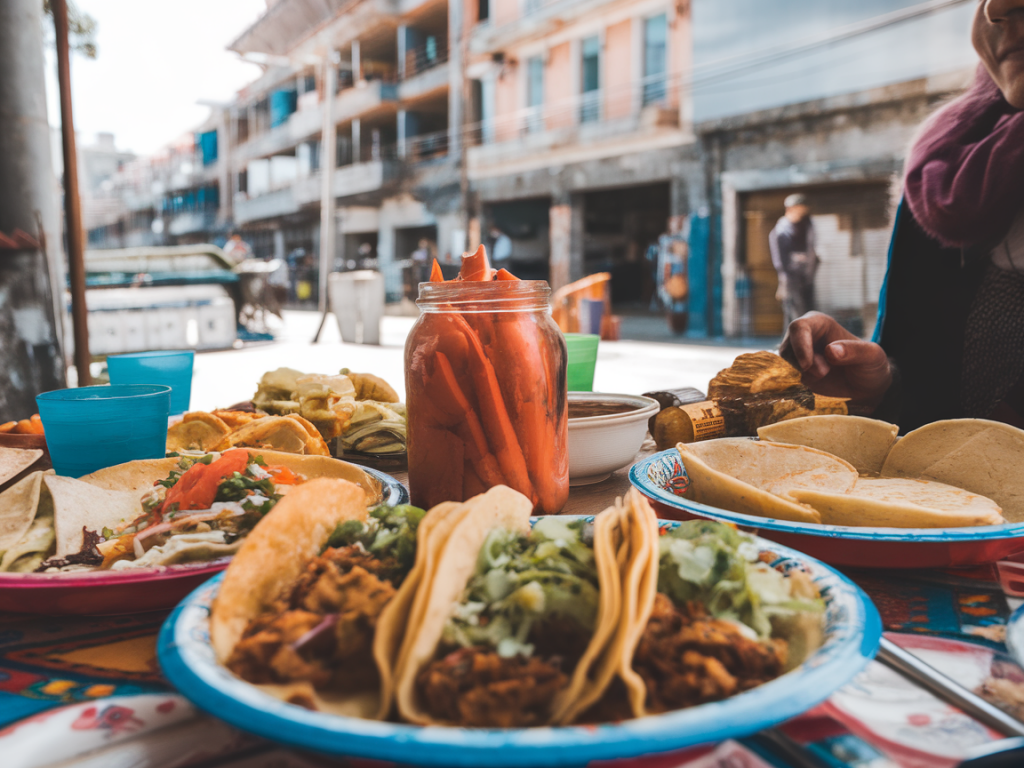
Mercado Roma is tourist-friendly but offers budget options if you know where to look—stand counters and shared tables let you try different things without spending a fortune. If you prefer truly cheap eats, I recommend walking side streets for street stands selling quesadillas, tlacoyos and gorditas from 20–40 MXN each.
To reach Mercado Roma from Insurgentes, you can either walk (15–20 minutes, pleasant) or take a single Metrobús short leg and hop off near Álvaro Obregón. I often walk because the streets themselves are full of great smells and small discoveries.
Afternoon: move south to Condesa’s parks and cafés
Condesa is compact—here you’ll want to slow down, sit on a bench and taste slowly. Walk from Mercado Roma toward Parque México/Parque España. If you prefer a bike, EcoBici stations pepper both neighborhoods; a short ride is a fun way to cover the distance and adds local flavor.
If you use EcoBici, register beforehand (easy via app or at a kiosk) and get a day pass if you plan on several rides. The first 45 minutes are usually included in the basic price, which matches the pace of hopping between cafés and snack stands.
Late afternoon: neighborhood snacks and the taco switch
Condesa is home to snack classics—elote stands, esquites, and cheap churros. For a hearty, budget-friendly second lunch, look for small fondas or puestos with fixed menus (comida corrida) for around 60–100 MXN. These are filling, authentic, and often the best value for a full meal.
If you want to hop back to Roma to taste a different taquería, the walking distance between core Condesa and Roma Norte is close enough that I usually walk (15–25 minutes). If you’re tired, a single Metrobús or short taxi/ride-share can cover the gap without hurting the wallet—set limits before you open the app.
Practical route map (stations and nearby eats)
| Station | Nearby |
| Centro Médico | Panaderías, small breakfast tortas, street coffee |
| Insurgentes (Metrobús) | Taquerías, street stands, Mercado Roma (walk) |
| Chilpancingo | Access to Roma Norte cafés, casual fondas |
| Hidalgo / Juárez (if coming from Centro) | Historic center eats — good if you’re starting from Centro |
Money-saving tips I use
- Buy and top up a Tarjeta CDMX at the first metro station you enter—it’s faster and cheaper than buying single cash tickets repeatedly.
- Eat like a local: choose busy stands with short queues and pay attention to where workers eat.
- Share plates. Many stalls let you order half portions or mix-and-match small items so you sample more for less.
- Limit ride-share use to evenings or long legs—public transit and walking cover most of Roma and Condesa.
- Carry small bills and coins; some tiny vendors don’t take cards and might not have change for large notes.
If you want, I can draft a timed, step-by-step itinerary for a specific arrival point (airport, Centro Histórico, or Condesa hotel) with exact stalls I recommend. I’ve run this loop many times and always find something new—part of the city's charm is that the best bites are often the least advertised.