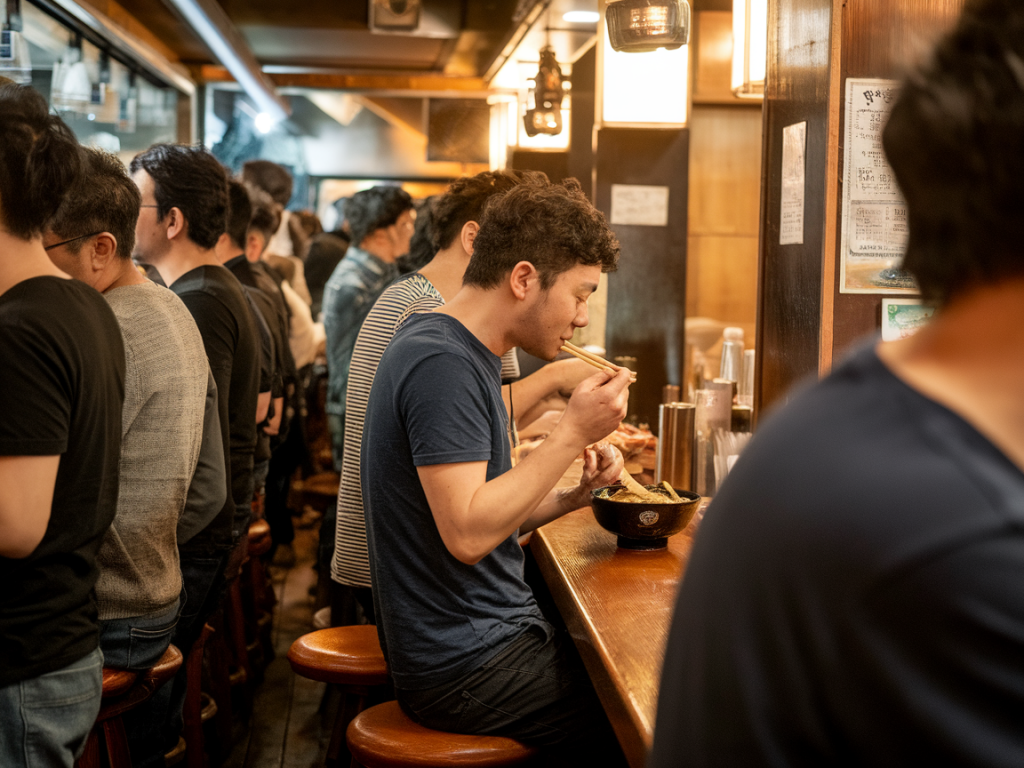
I remember my first night at a tiny standing ramen bar in Tokyo—late, rain on my jacket, and a neon sign humming above a narrow doorway. Inside, a dozen people stood shoulder to shoulder at a wooden counter, slurping steaming bowls with a concentration that felt almost reverent. I was nervous: do I queue correctly? How do I order from the vending machine? Should I tip? Over the years I’ve returned to these bars again and again, learning small rituals that help you eat like a local and avoid the little mistakes that make you stick out. Here’s what I now do when I duck into a standing ramen bar in Tokyo.
Find the right place and respect the queue
Tokyo’s standing ramen bars range from famous late-night joints near train stations to tiny neighborhood counters that focus on a single broth. If you’re following a tip from Acidadventure or a trusted local blog, check opening hours carefully—many bars close between lunch and dinner. When you arrive, follow the queue: there’s usually an unspoken single-file line. If there’s a numbered ticket system or a display, follow it. If not, stand behind the last person in line and wait patiently.
How to order: vending machines, paper slips, and verbal orders
Most small ramen bars in Tokyo use one of three ordering systems. Learn to recognize each one quickly so you don’t fumble.
What to order and how to customize
Ramen comes in endless varieties—shoyu (soy), miso, shio (salt), tonkotsu (pork bone), and more. Standing bars often specialize, so follow their signature. If they offer portion options, “seiro” or “futsu” typically mean standard size. For toppings, common extras are chashu (braised pork), ajitama (marinated egg), menma (bamboo shoots), and extra noodles.
When customizing, keep it simple. Many bars allow you to choose noodle firmness—soft, medium, hard. The phrase I use is “kotsu kata” (firm) or “yawaraka” (soft). If you have allergies, be explicit: “I have a soy allergy” or “No pork, please” (in Japanese: “shoyu ga dame desu” / “buta niku nashi, onegaishimasu”), but be aware that broths often contain multiple bases.
Standing etiquette at the counter
Standing ramen bars are compact and efficient. Staff are focused and fast; customers eat quickly to make room for the next. Here’s how I behave to keep the rhythm smooth.
Slurping, burping, and other sounds
One of the most common questions: is it rude to slurp? In Japan, enthusiastic slurping is considered normal—and even complimentary. Slurping aerates the noodles and cools the broth. I always slurp boldly; it feels natural in a ramen bar and signals appreciation to the cook. Burping is less celebrated in modern urban spaces—don’t make a point of it. A small, satisfied exhale is enough.
Where to put your chopsticks, napkins and trash
Most bars provide disposable chopsticks or reusable ones in sleeves. When you’re not using them, rest them on the chopstick holder if provided. Never stick chopsticks upright into your bowl—this is associated with funerary rituals.
Trash handling varies. Many ramen bars expect you to leave trays and empty cartons at a specific spot; others dispose of used items themselves. If there’s a small trash bin or a labeled spot for your ticket, use it. Don’t leave plastic wrappers or wet wipes at the counter surface.
Paying and tipping
Payment policy depends on the establishment. If you used a vending machine, payment was already made. If you ordered directly, pay at the register or hand cash to the cook if asked. Most standing ramen bars are cash-preferred, but increasing numbers accept cards or IC payments. I always carry cash for small places.
Tipping is not customary in Japan. Leaving extra money on the counter will likely be returned or cause confusion. Instead, show appreciation by finishing your bowl and nodding or saying “Gochisousama deshita” (thank you for the meal).
Photos: what’s acceptable and what isn’t
Photos are generally allowed if quick and unobtrusive. Do not photograph other customers without permission. Avoid shooting staff while they’re busy prepping unless you’ve asked. If you want a picture of the bar itself, ask the cook with a polite “Shashin ii desu ka?” (May I take a photo?). I’ve found most cooks are flattered and will sometimes pose for a quick shot if you’re polite.
Common mistakes to avoid
Quick checklist
| Before you enter | Check hours, queue patiently, have cash ready |
| Ordering | Use ticket machine or slip; point if unsure; keep customization minimal |
| While eating | Eat quickly, slurp freely, don’t call on the phone |
| When you leave | Return bowls if requested, say “Gochisousama deshita,” don’t tip |
My favorite tiny ramen memories are the ones made in these narrow, steamy corners of the city: the first spoonful that warms your rain-soaked hands, the brief exchange of thanks with a towel-wielding cook, the way a complete stranger’s satisfied nod turns the room friendlier. Standing ramen bars are short rituals of urban life—fast, delicious, and intimate. Approach them with curiosity, a little patience, and the few etiquette notes above, and you’ll leave with a full belly and a better sense of Tokyo’s everyday warmth.