The first time I chased a morning market in Lima, I woke before dawn and followed the sound of clattering pans and vendors calling out their specialties. Markets here are not just places to buy food — they are living rituals where taste, trade and community converge before the city fully wakes. If you want to find those rituals and, with respect and curiosity, step into a vendor’s prep routine, here’s how I do it: practical steps, small phrases that open doors, and habits that keep both your experience and the vendors’ work uninterrupted.
Where to start: choosing the right market
I aim for markets known for fresh produce and active morning trade. In Lima, my go-tos are:
- Mercado de Surquillo (Surquillo): centrally located and famous for produce, seafood stalls and small food stands — great for observing ceviche prep and breakfast stalls.
- Mercado 1 de San Isidro: a little more polished but still very local; excellent for seeing how higher-end ingredients are sourced for city restaurants.
- Mercado de Magdalena: colorful, busy and authentic — you’ll find tamales, caldo de gallina and pork stalls preparing before 7am.
- La Victoria markets: busier and rawer, ideal if you want to witness large-volume prep and the pace of wholesale trade.
Choose a market based on what you want to see: seafood rituals (Surquillo), breakfast preparations (Magdalena), or wholesale scale (La Victoria).
Timing and rhythm: when to arrive
Morning rituals happen early. I aim to arrive between 4:30am and 6:30am. At 4:30am you’ll catch vendors setting up, fish deliveries being gutted and tamales being wrapped. By 7am, breakfast crowds swell and the best close-up moments might be lost to service flow. If you can only go later, arrive just before the main breakfast rush (around 8am) to watch the tail end of prep and early service.
How to approach a vendor and ask to observe
Respect is the currency here. Vendors are working hard, and asking politely makes the difference between being welcomed or ignored. I always follow a simple protocol:
- Observe from a small distance first — don’t barge into the prep area.
- Smile, greet in Spanish: “Buenos días, ¿puedo ver cómo lo hacen?” or “Disculpe, ¿puedo observar un momento?”
- Offer to buy something immediately if you can — a plate of ceviche, a tamal, or even a small coffee. Purchasing is both etiquette and thanks.
- If you want photos, ask separately: “¿Le importa si tomo una foto?” Many vendors will say yes but prefer you don’t use flash.
- If you hope to help in prep, suggest it gently: “Si necesita ayuda, puedo echar una mano” — but accept a polite no.
What a vendor’s prep routine looks like
Every stall has its choreography. Here are common scenes I’ve watched and the details I listen for:
- Seafood stalls (cevicherías): Fish arrives iced, is filleted and queued in trays. Vendors test freshness by scent and texture, then slice, salt briefly, and add limón just before service. Watch the rhythm of the knife and the squeeze of lemon — it’s precise and fast.
- Breakfast stands: Tamale wrappers are steamed while frying stations bubble with pork or chicken for chicharrón or caldo. Vendors often multitask: stirring a pot while taking an order, folding banana leaves, or sculpting a causa.
- Anticucho skewers: Meat is marinated overnight; mornings are for skewering, grilling and basting. The stall’s heat management and speed protect texture and flavor.
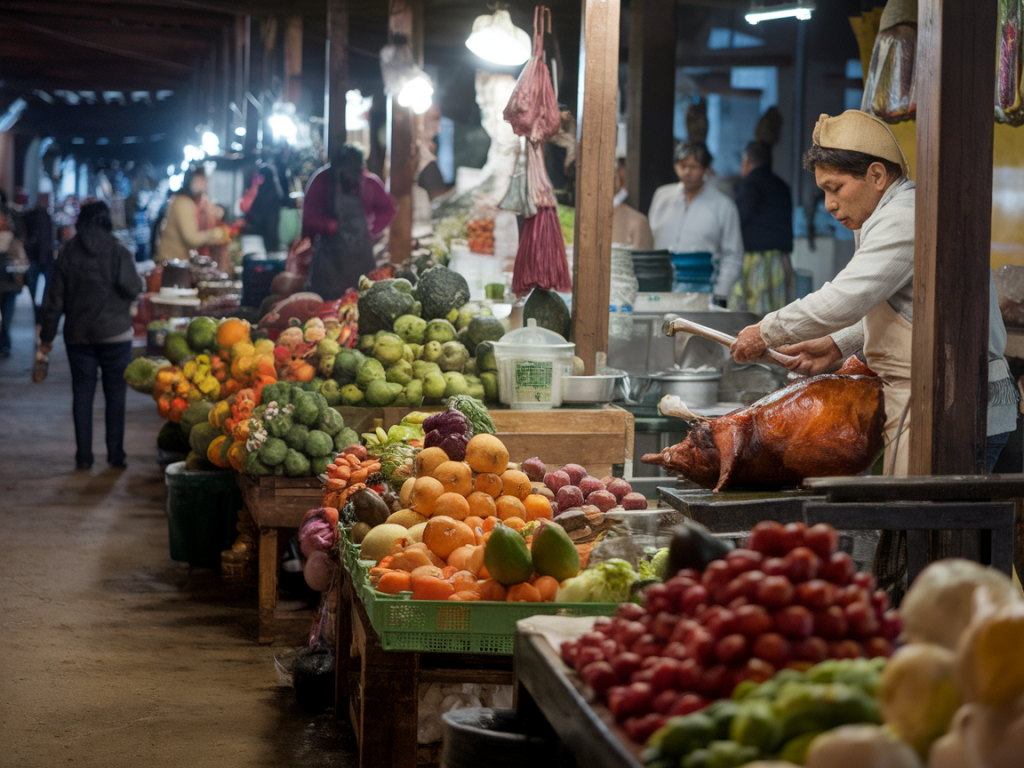
- Produce vendors: Sorting, washing, and arranging produce is almost ceremonial — bunches of cilantro rinsed, peppers grouped by color, and limes rolled to make them juicier.
Language tips that unlock participation
A handful of phrases goes a long way. I keep them in my pocket and use them early:
- "Buenos días" — the essential opener.
- "¿Cuánto cuesta esto?" — how much is this?
- "Está delicioso" — it’s delicious (say this after you taste something).
- "¿Puedo ayudar?" — can I help?
- "¿Puedo tomar una foto?" — can I take a photo?
Small compliments about the food or the stall’s appearance warm interactions. Avoid being overly effusive — authenticity matters.
Etiquette, tipping and payment
Pay for what you sample. I always buy a small plate first — it’s the most respectful way to observe. Cash is king in markets; keep small bills and coins. Tipping isn’t expected the way it is in restaurants, but leaving a small tip or paying a little extra when a vendor indulges your questions is appreciated. If someone invites you to help, offer a small payment or buy an additional item at the end.
Safety and health considerations
Markets are bustling; keep belongings close and use a cross-body bag or money belt. For food safety:
- Choose busy stalls — popularity usually equals turnover and fresher food.
- Watch how food is handled: are hands washed? Are raw and cooked items separated?
- If you have a sensitive stomach, stick to hot dishes (tamales, caldo de gallina, anticuchos) or very lively cevicherías where acid and freshness are obvious.
- Carry hand sanitizer or use stalls with running water to rinse hands.
Photo tips for capturing the morning ritual
I shoot with a compact mirrorless camera and prioritize texture and motion over perfect composition. My practical photo tips:
- Use natural light — internal market lighting is harsh; position yourself near open doors or skylights.
- Turn off flash — vendors dislike it and it flattens texture.
- Choose a wide aperture (f/2.8–f/4) to isolate hands, knives and steaming pots while keeping context visible.
- Shoot short bursts when people move — the rhythm of a knife or the pour of limón is best in a sequence.
- Respect privacy: ask before photographing faces up close, and be ready to delete shots if someone asks.
What to order — dishes that tell a story
Sampling is part of learning. Here are dishes I seek during a morning market visit and why:
- Ceviche — raw fish cured in citrus; watching the immediate prep reveals choices about fish, onion soaking and citrus timing.
- Tamal — wrapped in banana leaf and steamed; the wrapper, masa texture and fillings vary regionally and reveal home-style methods.
- Caldo de gallina — a restorative chicken soup popular for breakfast; notice the clarity of broth and the layering of herbs and noodles.
- Chicharrón — fried pork, often paired with sweet potato or bread; perfectly crisp edges are a vendor’s pride.
- Anticuchos — skewers marinated and grilled over charcoal; the marinade’s acid, spice and time impart distinct smell and color.
Sample morning checklist
| 3:30–4:00am | Set alarm, review map (Google Maps + local names), charge camera battery. |
| 4:30–6:30am | Arrive at market, observe quietly, greet vendors, buy a first small item. |
| 6:30–7:30am | Ask to photograph/observe prep, taste signature dishes, offer to help if invited. |
| 7:30–8:30am | Pay, thank vendors, take a slow walk back to absorb the neighborhood and photograph details. |
Markets are living, breathing classrooms. When you move slowly, ask clearly and pay the vendor for their labor and time, you’ll find yourself not just watching a ritual but being welcomed into it. Bring curiosity, a few local phrases, and the willingness to learn — Lima’s markets will do the rest.