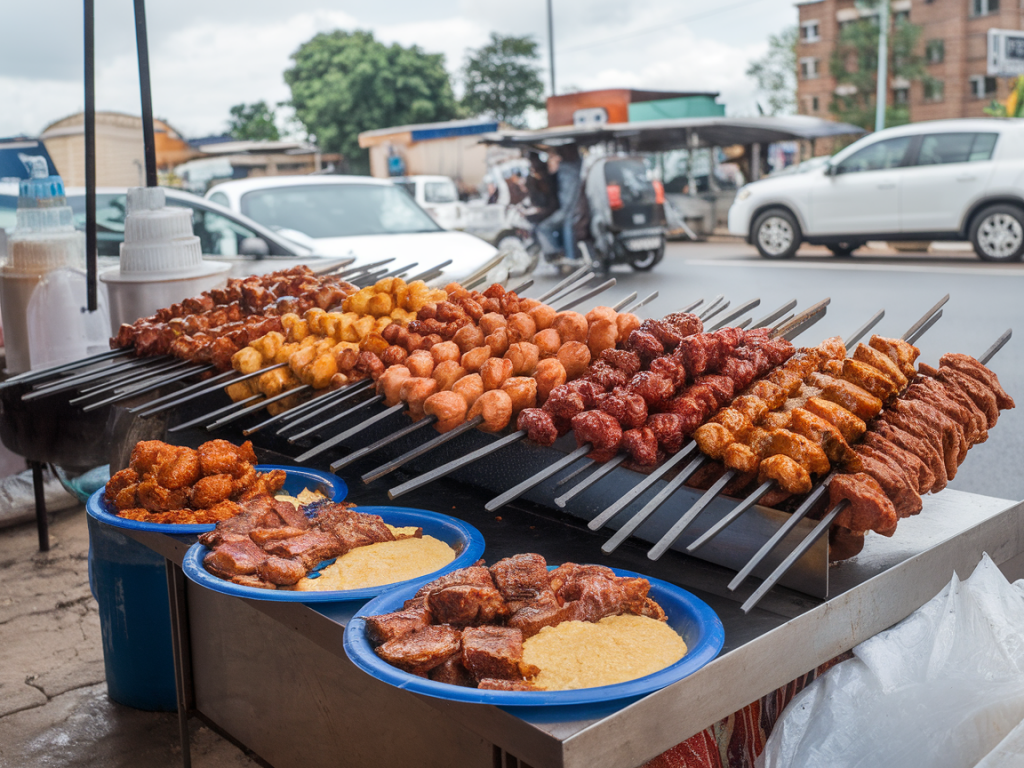
I crouched by a glowing charcoal brazier on a Lagos street as steam and spice-scented smoke braided into the evening air. The suya cook, his hands moving sure and quick, threaded skewers of thinly sliced beef and brushed them with a fiery peanut-chili rub that crackled on the coals. Around us, commuters, students and late-night market stall vendors paused for the same ritual: a hot skewer, a handful of sliced onions and a cold sachet of water or a chilled soft drink. If you want one of the most immediate, delicious ways to be part of Lagos life, suya roadside stalls are it.
What suya is — and why roadside stalls matter
Suya is more than grilled meat. It's a communal food culture born in the Sahel and perfected in Nigerian cities: thin slices of meat (usually beef, chicken or sometimes goat) coated in a dry, aromatic spice mix called yaji — peanuts, ginger, paprika or cayenne, garlic powder and salt — then cooked over charcoal. Roadside suya stalls are where labor, flavor and conversation meet: the vendors (often called mai suya) are storytellers, spice merchants and grill masters all at once. Eating at one feels like joining an ongoing neighborhood party.
What to order — a practical and sensory guide
When you arrive at a suya stand, here are the items and options I look for and order, depending on my appetite and the time of day:
- Suya beef (classic): The default. Ask for well-cooked if you're cautious about doneness; ask for spicy or mild depending on your tolerance. I often order 2–3 skewers to share.
- Chicken suya: Leaner and quicker to cook. Softer texture but still packed with yaji flavor.
- Asun (spicy roasted goat): Not always available, but worth ordering if you see it — intensely flavored and chewier than beef.
- Kilishi: Dried, thinly sliced spiced beef — a suya cousin that's portable and great as a snack.
- Suya with accompaniments: Always ask for sliced raw onions, tomatoes and cucumbers — they cut the heat and add crunch. Some stalls serve slices of bread (for scooping sauce) or flatbreads.
- Garnishes: Extra yaji, fried plantain (dodo), or steamed yams (depending on the vendor).
- Drinks: Bottled soft drinks, chilled sachet water, or local beers where sold — I usually take something cold to balance the spice.
How to order and communicate
Ordering suya is relaxed but there are a few local customs that pay off:
- Approach the grill from the side — don't stand directly in front of the cook blocking access. A casual wave and a clear request like "two beef suya, small" usually works.
- Specify how many skewers or how many people it's for: "one for me, two for sharing."
- For spice level, use "mild" or "hot". If you want the full Lagos experience, try medium first.
- Cash only is common — small denominations help. Tipting is appreciated; leave small change or round up.
Staying safe — food, street and personal safety tips
Suya stalls are generally safe and hygienic by street-food standards, but a few practical precautions make the experience smoother:
- Watch the heat and doneness: Meat cooked over charcoal is usually well-charred on the outside. If you're worried about undercooking, ask for extra time on the grill. For chicken and goat, ensure it's cooked through.
- Choose busy stalls: High turnover equals freshness. I look for stands surrounded by locals — that’s usually a good sign the meat doesn't sit long.
- Portable water and hand hygiene: Bring hand sanitizer or wipes. Many stalls don't have running water for customers. I wipe my hands before and after eating — and before any photos.
- Street awareness: Lagos streets can be bustling and chaotic. Keep belongings close, use a crossbody bag, and avoid flashing expensive gear in crowded places at night.
- Eat where you stand or sit locally: If a stall has a simple bench, sit with the locals — you're less of a target and more likely to be welcomed. If you prefer to take away, request a clean plate or wrapper.
Politeness and cultural etiquette
Politeness opens doors here. A few small gestures make interactions better for both you and the mai suya:
- Greet first: A simple "Good evening" or "How are you?" in English works. If you can manage a greeting in Nigerian Pidgin ("How far?") or Yoruba/Hausa/Igbo depending on the area, it’s appreciated.
- Ask before photographing: Always ask the cook or the people around you before taking close-up pictures. Most vendors are proud of their grills and will agree, but some may prefer not to be photographed.
- Respect serving order: In busy stalls you might be served in the order you came. Pushing ahead is rude.
- Share a skewer: If invited to share, accept — communal eating is part of the suya vibe.
How to look photogenic — for food and street photos
I travel with a compact mirrorless camera and find suya stalls are perfect for intimate street photography. Here are compositional and behavioral tips to get authentic shots without being intrusive:
- Shoot at golden hour and blue hour: The soft light just before sunset and the neon-lit street after dark make the charcoal glow and red spices sing. I often aim for the last hour of daylight.
- Use a fast lens or high ISO: Street stalls are low-light environments. A 35mm or 50mm with f/1.8 and ISO 1600–3200 will save the shot without flash.
- Get the smoke in the frame: The looping smoke adds atmosphere. Backlight the smoke for texture — position the cook between you and the light source if possible.
- Capture hands and movement: Close-ups of the mai suya's hands flipping skewers or sprinkling yaji tell a better story than posed portraits.
- Minimal flash: Avoid on-camera flash; it flattens the scene and can upset vendors. If you must use light, bounce or use a small continuous LED on low power.
- Be discreet and ask permission: People are often fine with candid photos if you ask politely and show them the picture afterward — it builds rapport.
Quick ordering cheat-sheet
| Common item | What to expect | Photo tip |
| Beef suya | Charred, spicy, nutty; 1–3 skewers per person | Close-up of yaji texture; shallow depth of field |
| Chicken suya | Lean, quicker; less fatty char | Action shot of flipping on grill |
| Kilishi | Thin, dried, chewy — great snack | Texture detail with backlight |
| Onion + tomato garnish | Fresh crunch to balance heat | Color contrast in wide shot |
On my first nights in Lagos I learned to trust the crowd. A suya stand bustling with neighbors, motorbike riders and students is the culinary GPS you want: it points to freshness, familiarity and flavor. Approach with curiosity and respect, order what the locals order, keep your valuables secure and your camera settings ready — and you’ll leave with not just a full belly but a small collection of city moments that smell of charcoal and spice.