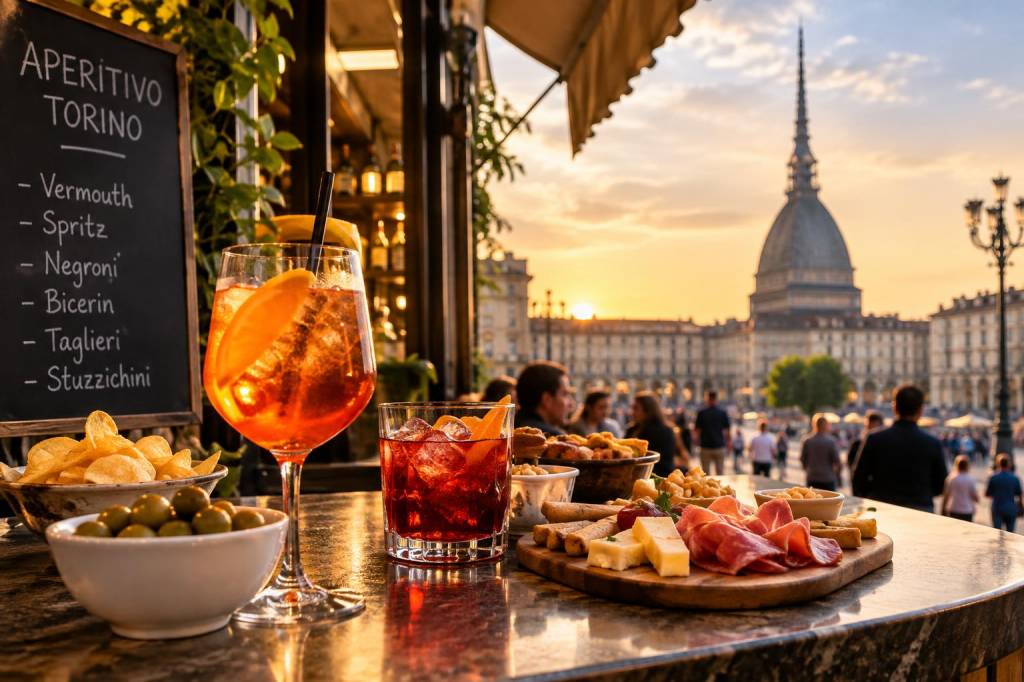
I like arriving in Turin before dinner rush, when the city still feels stretched between workday rhythm and evening pleasure. That is the moment when aperitivo counters are at their most generous: trays are still full, regulars are settling in, and bartenders have enough breathing room to chat about what is worth ordering right now. In Turin, aperitivo is not just a drink before dinner. It is a social habit, a small ritual, and one of the easiest ways to feel the city at street level.
When I look for late-afternoon aperitivo counters in Turin, I usually head toward areas where office life, student energy, and neighborhood habits overlap. I want places that feel active without being theatrical, where locals stop in for a glass, a snack, and a quick pause before heading home. I am not hunting for a polished cocktail scene first. I am looking for places that still serve a proper banco aperitivo experience: a standing counter, a tray of snacks, and enough movement to make the room feel alive.
Where I usually start in Turin
I begin in the historic center, especially around Via Roma, Piazza San Carlo, and the streets that connect them. This area gives me a reliable first pass because many elegant cafés and wine bars keep their aperitivo service sharp, and the pace stays civilized even when the sidewalks fill up. I like stopping early enough to catch the counter before the fullest crowd arrives, usually between 5:30 and 6:30 p.m. That window often means fresher snacks, faster service, and a better chance of finding a spot at the bar rather than waiting for a table.
From there, I often walk toward Quadrilatero Romano. This is one of my favorite parts of the city for an aperitivo crawl because the atmosphere shifts quickly from refined to lively. Narrow streets, small rooms, and a dense mix of bars make it easy to move from one counter to another without committing to a long sitting. I like this district for impromptu grazing: one stop for a glass of vermouth, another for a plate of savory bites, and a final one if a place looks especially inviting from the doorway.
San Salvario is where I go when I want something a little less formal and a little more neighborhood-driven. The aperitivo scene here feels younger, more mixed, and more casual, with plenty of places that serve drinks alongside small buffets or plated snacks. It is a good area if you want to linger without feeling trapped in a polished ritual. I find that the energy here builds later than in the center, so if I arrive early evening I can usually move easily between counters before the loudest hour.
Vanchiglia is another area I keep in mind, especially when I want a slower, more local-feeling walk. I use it for aperitivo when I want to avoid the most obvious tourist drag and sit somewhere where people seem to know one another. The service can be less flashy, but that is part of the appeal. If a bar here puts care into its snacks, I notice immediately.
What a Turin aperitivo counter usually means
In Turin, an aperitivo counter is often a place where drinks and snacks are arranged with more attention than in many other cities. You may find olives, breadsticks, small sandwiches, slices of focaccia, cheese, cured meat, vegetable tarts, and sometimes warm dishes if the bar leans generous. Some places still do a classic spread that lets you assemble a small meal. Others keep it more restrained and focus on a few excellent nibbles served with the drink.
I always pay attention to whether the counter looks refreshed regularly. A good aperitivo stop in Turin should feel in motion. Trays should not sit dry or ignored for too long, and the staff should be attentive enough to replace empty plates before the whole setup feels tired. I do not mind a minimalist selection if the quality is strong. In fact, I often prefer a tight, well-made snack list over a sprawling buffet that has lost its freshness.
If a bar offers a standing counter, I usually take it. Standing at the bar gives me a better sense of the room, and I can often order faster, observe what others are drinking, and ask for recommendations without feeling rushed. It also feels more in tune with the local rhythm. Sitting down is fine when I want to slow the pace, but the counter is where I feel the pulse of the evening.
What I order before dinner crowds arrive
My first instinct in Turin is often to order a glass of vermouth or a drink built around it. This city has deep vermouth roots, so I like to drink something that feels connected to place rather than defaulting straight to a generic spritz. A dry vermouth served cold with a twist can be an excellent opener. If I want something slightly more complex, I ask for a vermouth-based cocktail that is not too sweet and not too heavy.
I also like a classic Negroni when the weather is warm and I want something bitter enough to sharpen my appetite. Turin does bitters well, and I trust a city like this with a drink that asks for balance. If I am moving slowly through multiple bars, I may start with something lighter and save the Negroni for later, once the streets begin to fill and the light turns gold.
When it comes to snacks, I usually order a mix rather than a single plate. I like to see what the bar does well. A few things I often look for:
- Olives that taste briny and fresh, not tired
- Good breadsticks or crisp bread with a clean snap
- Small savory pastries or tartlets
- Local cheeses with fruit or mustard accents
- Thin slices of salami, prosciutto, or cured meats
- Focaccia or small sandwiches that still feel soft inside
If a place offers tramezzini, I rarely pass them up. They are one of my favorite aperitivo snacks in Italy when done well: soft, neat, and somehow both old-fashioned and comforting. I also keep an eye out for giardiniera, marinated vegetables with enough acidity to wake up the palate before dinner.
When I am especially hungry, I try to eat in a way that still leaves room for dinner. That means choosing snacks that are savory but not overwhelming. I avoid loading up too heavily on fried foods if I know I have a reservation later. On the other hand, if I am making aperitivo my main meal, I let myself order more freely and treat the counter like a small tasting spread.
How I choose a good bar from the street
I have learned to trust a few visual clues. If I see locals standing at the counter with a relaxed posture, I take that as a promising sign. If the snacks look recently arranged and the room has a steady flow of people without chaos, even better. I also look for places where the menu is not trying too hard. A bar that knows what it is doing usually does not need to shout.
In Turin, I especially appreciate bars that keep their aperitivo service elegant without becoming stiff. A good room can feel polished and easy at the same time. I like a bartender who notices whether I want a quick drink or a slower evening. I like menus that are readable without being overdesigned. And I always trust the places where the glasses arrive cold and the snacks arrive before I have had to ask twice.
If I am unsure, I will stand outside for a minute and watch. I look at what people are drinking, whether anyone is returning to the counter for another round, and whether the staff seem to know the regulars by name. That small bit of observation often tells me more than any online rating.
What makes Turin different from other aperitivo cities
Turin feels more restrained and refined than cities where aperitivo turns into pure spectacle. I find that charming. There is a stronger sense here that aperitivo belongs to everyday life, not only to visitors. Even when the room is stylish, the mood often stays measured. People talk, sip, snack, and move on without making a performance of it.
The city’s long relationship with coffee, vermouth, chocolate, and royal-era elegance also gives aperitivo a distinct character. I feel that history in the details: the rooms with high ceilings, the polished mirrors, the old café traditions, the sense that a drink can still be a civic ritual. This is one reason I prefer Turin in late afternoon over later at night. Before the crowds arrive, the city’s personality feels clearest.
I also like that I can pair aperitivo with a walk. I may begin near Piazza San Carlo, drift through the center, then cross into the Quadrilatero or San Salvario as the evening deepens. That mobility is part of the pleasure. The city does not demand that I settle too quickly. It rewards curiosity, short detours, and a willingness to choose the next glass based on what looks inviting rather than what is most famous.
A practical table for ordering with confidence
| What I order | Why it works in Turin | When I choose it |
|---|---|---|
| Dry vermouth | Local, elegant, and ideal for early evening | When I want a light, focused start |
| Negroni | Bitter, classic, and strong enough for a cooler evening | When I want something deeper and more aromatic |
| Tramezzini | Soft, filling, and very satisfying with wine or cocktails | When I want a snack that feels like a small meal |
| Olives and cured meats | Simple, salty, and easy to share | When I am moving between bars |
| Focaccia or savory pastries | Reliable comfort food before dinner | When I arrive hungry and want substance |
I keep coming back to Turin because aperitivo here feels like a conversation between city and appetite. The counters are not just places to eat and drink. They are places where timing matters, where a good choice made before the crowd arrives can shape the rest of the evening, and where a short pause can turn into the most memorable part of the day.