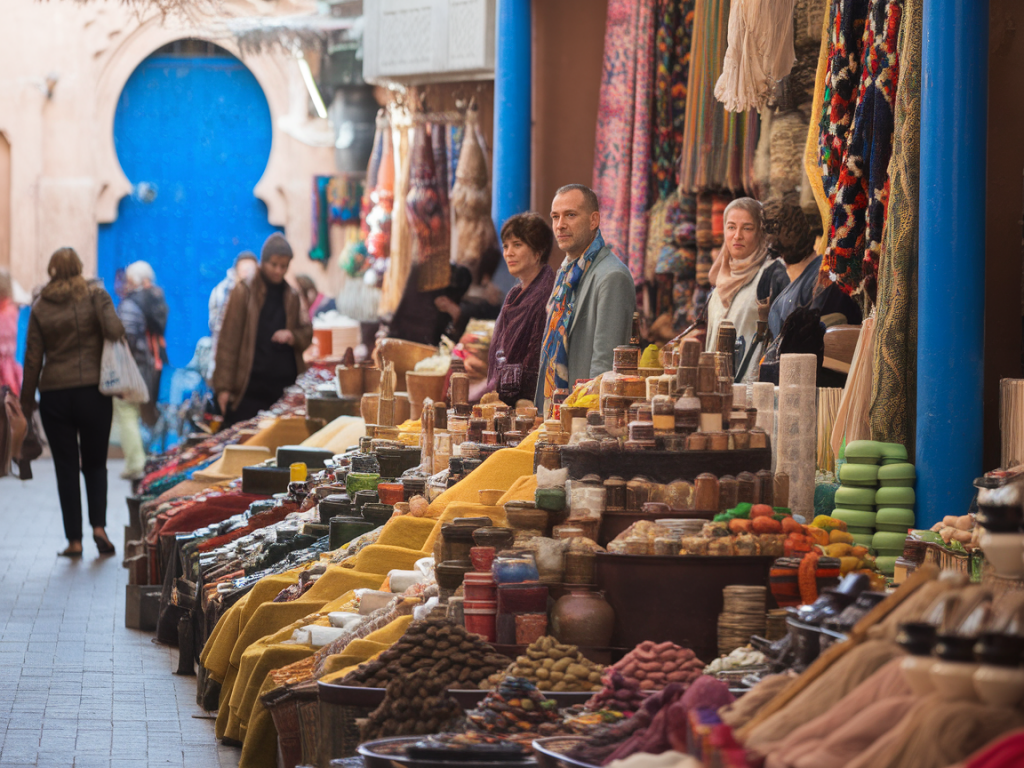
I learned to haggle the hard way in Marrakech — not as a sport but as a survival skill when you’re trying to eat well, buy a rug that will fit through a European doorframe, and leave with your sense of humor intact. Over the years I’ve come to enjoy bartering in the souks as a dance more than a duel. It’s part market, part theatre, and at its best it’s an exchange that leaves both sides smiling. Here’s a compact, practical guide to negotiating prices in Marrakech’s souks without offending the sellers — tested during countless wanderings through Jemaa el-Fnaa, the tangle of alleys in the medina and the quieter souks near Bab Doukkala.
Read the room: set your intention before you enter
Before you walk into a stall, pause and check your aim. Do you want to learn about a craft? Are you looking for a one-off souvenir? Or do you need a functional item at a fair price? Your intention will shape your tone. If you’re there to admire and photograph, a friendly “no, thank you” is enough. If you want to buy, signal interest — brows furrowed, object handled, a few questions asked. Sellers are more likely to engage in a real negotiation when they know you’re genuinely interested.
Open with curiosity, not suspicion
Start with questions. Ask about the material, the village it came from, how it was made. A simple “Where is this made?” or “How long did it take?” invites a story. Sellers love sharing provenance — it humanizes the object and gives you room to ask for a better price later. If someone tells you a weaving took two weeks, you can say, “That’s amazing — I can see the work. What would you accept for it today?” Curiosity sets a tone of respect.
Anchor and test: how to make the first move
In Marrakech the seller will often name a price first, and it will usually be high — that’s expected. Don’t react with shock; smile and make a lower counter-offer. A good rule of thumb is to start at about 30% of the asking price for small, common items (ceramic bowls, scarves) and 40–50% for higher-value pieces (leather bags, rugs). For example, if the seller asks 600 MAD (about €55) for a leather satchel and you think it’s worth 200–300 MAD, offer 220 MAD. This gives you room to move upward while still steering the deal.
Use cash and exact change to your advantage
Cash is king in the souks. Bring small bills and coins in Moroccan dirham (MAD) and avoid large notes that force awkward change-making. When you pay with exact change, it signals seriousness and simplifies the transaction. If you plan to buy several items from one stall, arrange a combined price — vendors are often happy to give a better deal on a bundle.
Read non-verbal cues
Body language tells you when to persist and when to retreat. If the seller leans in, lowers their voice, or starts to include extras (a free scarf, repair), you’re close. If they step back, fold their hands, or call another customer over, they may be holding firm. A warm smile and a steady gaze go a long way. If you reach your target price and they hesitate, offer to pay immediately — the promise of immediate cash can nudge a yes.
Know when to walk away — and how to do it gracefully
Walking away is a bargaining tactic. Say “thank you” and begin to leave; often the seller will call after you with a lower offer. If they don’t, you’ve saved time and preserved goodwill. Keep your tone light. I usually say, “It’s lovely, but it’s not quite right for me today.” This leaves the door open for future encounters and avoids rude refusals that could sour your experience.
Watch for fixed-price signs and shops
Not every place wants to haggle. Modern boutiques, cooperatives like Cooperative Tapis or certain artisan workshops often have fixed prices that support fair wages. If a shop has a price list or appears to be part of a cooperative, respect that. Bargaining there can feel insulting. When in doubt, ask, “Is the price flexible?” and accept the answer.
Use empathy: haggle for fairness, not humiliation
Remember that many vendors earn their living from small margins. If you’ve seen a piece in multiple stalls and one shop’s price is much higher, use that information discreetly: “I saw a similar plate for 70 MAD — can you match that?” Avoid demeaning the seller with accusations of greed. Your goal should be a fair price that values both the craft and your budget.
Learn a few local phrases
A couple of words in Moroccan Arabic (Darija) can open hearts. Try: “Bslama” (goodbye), “Shukran” (thank you), “Bechhal?” (how much?). A seller who hears you trying these phrases will often respond with warmth. If you can, learn how to count to 100 in Darija — it helps when you’re bargaining numbers back and forth.
Price-check table: typical ranges to expect
| Item | Typical tourist price (MAD) | Reasonable negotiated price (MAD) |
|---|---|---|
| Ceramic bowl, small | 80–200 | 40–90 |
| Leather babouche (slippers) | 150–400 | 80–180 |
| Wool scarf | 120–350 | 60–150 |
| Small rug / kilim | 800–3,500 | 500–1,500 |
| Lantern | 200–800 | 120–350 |
Special tips for bigger purchases (rugs, furniture)
For large items like rugs, slow down. Spend time learning about dyes, knots, and village styles. Ask to see the certificate (if any) and negotiate based on that knowledge. If you won’t be carrying the item yourself, clarify shipping and insurance costs before sealing the deal. And always get a receipt with the seller’s name and address when possible.
Protect yourself from scams without becoming cynical
There are common tricks: initial overt friendliness that turns into pressure, staged “helpful” guides, or claims that an item is one-of-a-kind. Stay polite, trust your instincts, and cross-check prices in several stalls. If a story seems contrived, ask specific questions. A real artisan will answer details about technique and origin; a story that trips up under gentle questioning is probably salesmanship, not heritage.
After the sale: show appreciation
A sincere “thank you” and a smile matter. If you bought something you love, share a quick photo on social media and tag the stall if you can — small acts like that often mean a lot to a vendor. In my travels I’ve had warm follow-ups from sellers who later recognized me in the square. Bargaining done with kindness builds rapport and makes Marrakech’s souks feel like a community rather than a marketplace.
- Tip: Keep a little notebook of prices and stalls you liked — it saves time and avoids awkward renegotiations later.
- Tip: If you don’t speak Arabic or French, a translation app with offline capabilities (like Google Translate) can be handy for numbers and quick phrases.
- Tip: Shop later in the day if you want better deals; vendors often prefer to sell rather than carry stock overnight.