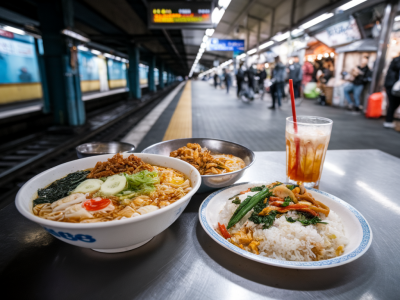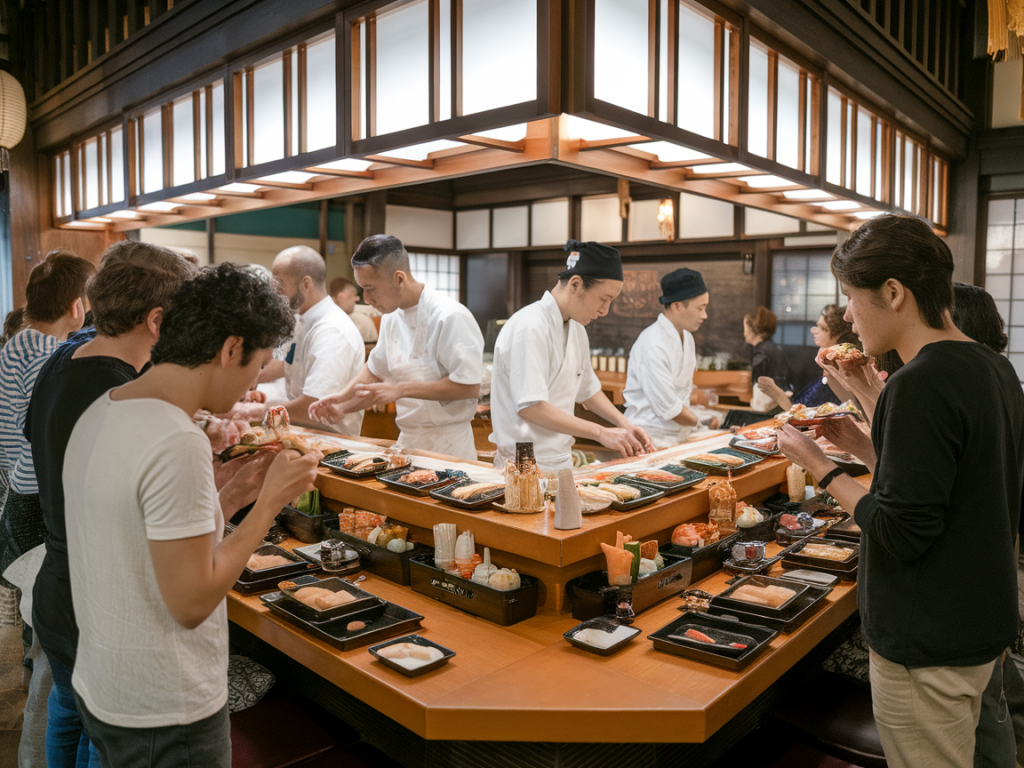
When I first landed in Tokyo, bleary-eyed from a long flight, I wandered into a narrow alley and found my first standing sushi bar. The counter was tight, the sushi came fast, and the whole experience felt like a secret handshake: quick, intimate, and brimming with ritual. Since then, I seek out these tiny, efficient counters—known as tachigui sushi or standing sushi bars—every time I visit. They’re where the city eats between trains, where salarymen and students swap a nod, and where you can have some of the freshest fish without the formality (or the bill) of a full-course sushi restaurant.
What is a standing sushi bar?
A standing sushi bar is exactly what it sounds like: a sushi counter with no chairs. They range from tiny stalls squeezed into train stations to polished shops with a short row of counter space. The focus is on quick, expertly made pieces served directly to you by a chef who rarely has time for small talk. For travelers, these bars are efficient, affordable and a great way to taste real Tokyo—no reservation required.
Before you step in: queuing, small talk and timing
In Tokyo, a queue is a kind of social contract. If you see people waiting, join the line and wait your turn—don’t cut in. When the chef nods and says irasshaimase (welcome), a simple nod or a quiet arigato will do. At rush hour many bars fill with commuters, so arrive with the mindset of eating quickly—this is not the place for long conversations or spreading out your laptop.
Where to find good standing sushi bars
Look for places near major stations. Chains like Uogashi Nihon-Ichi and local favorites often have branches in or near Tokyo Station, Shinjuku and Shibuya. I also like to seek out smaller, independent counters in neighborhoods like Kanda or Tsukiji Outer Market for a more theatrical chef experience. If you’re navigating with an IC card (Suica or Pasmo), check the door—some accept IC cards or cards, but many still prefer cash.
How to approach the counter
Stand with a modest distance from the chef—close enough to reach your plates and interact, but not so close that you’re breathing down their shoulders. Place your bag on the small shelf (if there is one) rather than on the counter. If you’re with friends, stand side-by-side rather than facing each other; the counter layout is designed to keep focus on the sushi and the chef.
Ordering etiquette: what to say and how to start
If you can, learn a few phrases: sumimasen (excuse me) to get attention, osusume (recommendation) to ask what’s good, and omakase de to leave it to the chef (if you want a rapid, curated experience). Many standing bars also have a small menu with prices; feel free to point. A simple pattern I use: ask for three starter pieces (often tuna or seasonal fish), then order one or two more as I go along. The chef will appreciate decisive, paced ordering—he prepares each piece to serve at its best.
How to eat nigiri like a local
There are two proper ways to eat nigiri: with your hands or with chopsticks. At a standing bar, hands are perfectly acceptable and sometimes recommended—especially for delicate pieces. Pick up the nigiri, turn it lightly, and dip the fish (not the rice) into the soy sauce. Over-salting will overwhelm the chef’s seasoning, so use a light touch.
Soy sauce, wasabi, and other seasonings
Many chefs already place the right amount of wasabi between fish and rice. If you add more, do so sparingly. For soy sauce, dip the fish side and not the rice—doing otherwise risks breaking the nigiri apart. If a piece arrives brushed with a sauce (often for eel or seared items), don’t add more soy. If in doubt, ask: kore, shoyu wa irimasu ka? (Does this need soy sauce?)
What to order: a quick guide
Standing bars are perfect for trying a mix of familiar and local favorites. Below is a small table I keep in my head when I’m at the counter; it helps me balance taste, texture and price.
| Item | What to expect | How to eat |
|---|---|---|
| Akami (lean tuna) | Clean, meaty, affordable | Eat as served; light soy |
| Chutoro/Otoro (medium/fatty tuna) | Rich, melt-in-mouth; pricier | Enjoy as-is; minimal soy |
| Engawa (flounder fin) | Textured, slightly chewy, subtly sweet | Squeeze lemon if offered |
| Uni (sea urchin) | Creamy, briny; best fresh | Eat quickly; savor |
| Anago (saltwater eel) | Soft, saucy, often brushed with tare | No extra soy |
| Tamago (sweet omelette) | Sweet and savory finish | Use as a palate cleanser |
Speed and pacing
These bars are made for rhythm. Order a few pieces, eat, chat briefly with the chef, then order more. Many chefs will suggest a natural sequence (lighter fish to richer fish, or raw to cooked). I let them guide when possible; it’s one of the pleasures of the counter—watching how a chef composes a quick, balanced meal.
Drinks and pairing
Sake, beer and green tea are standard. A crisp lager (Asahi, Sapporo) pairs nicely with fattier tuna, while a dry sake works with delicate white fish. If you’re unsure, ask the chef for a recommendation—standing bars often stock local sakes that aren’t on big restaurant menus.
Payment and tipping
Most standing sushi bars expect immediate payment at the counter. Cash is common; many accept cards or IC payments but don’t rely on it. Remember: tipping isn’t customary in Japan. Paying the bill is straightforward—people simply state the amount or hand over cash; the chef or attendant will return change. If you enjoyed the service, thank the chef with a smile and a short gochisousama deshita (thank you for the meal).
Photography and respect
Taking photos is usually fine, but be mindful: some chefs dislike flash or extended photo sessions that slow the line. Keep your camera or phone on silent, ask quickly if you want a picture of the chef at work, and don’t use a tripod in the narrow space. I always say “may I take a quick photo?” in Japanese—shashin o totte mo ii desu ka?—and most chefs nod if they don’t mind.
Common mistakes to avoid
Every time I leave a standing sushi bar, I feel like I’ve had a short, intense encounter with Tokyo itself: efficient, hospitable and full of flavor. If you go with curiosity, respect and a willingness to follow the chef’s rhythm, you’ll get more than a meal—you’ll get a small, memorable performance that tastes like the city.